
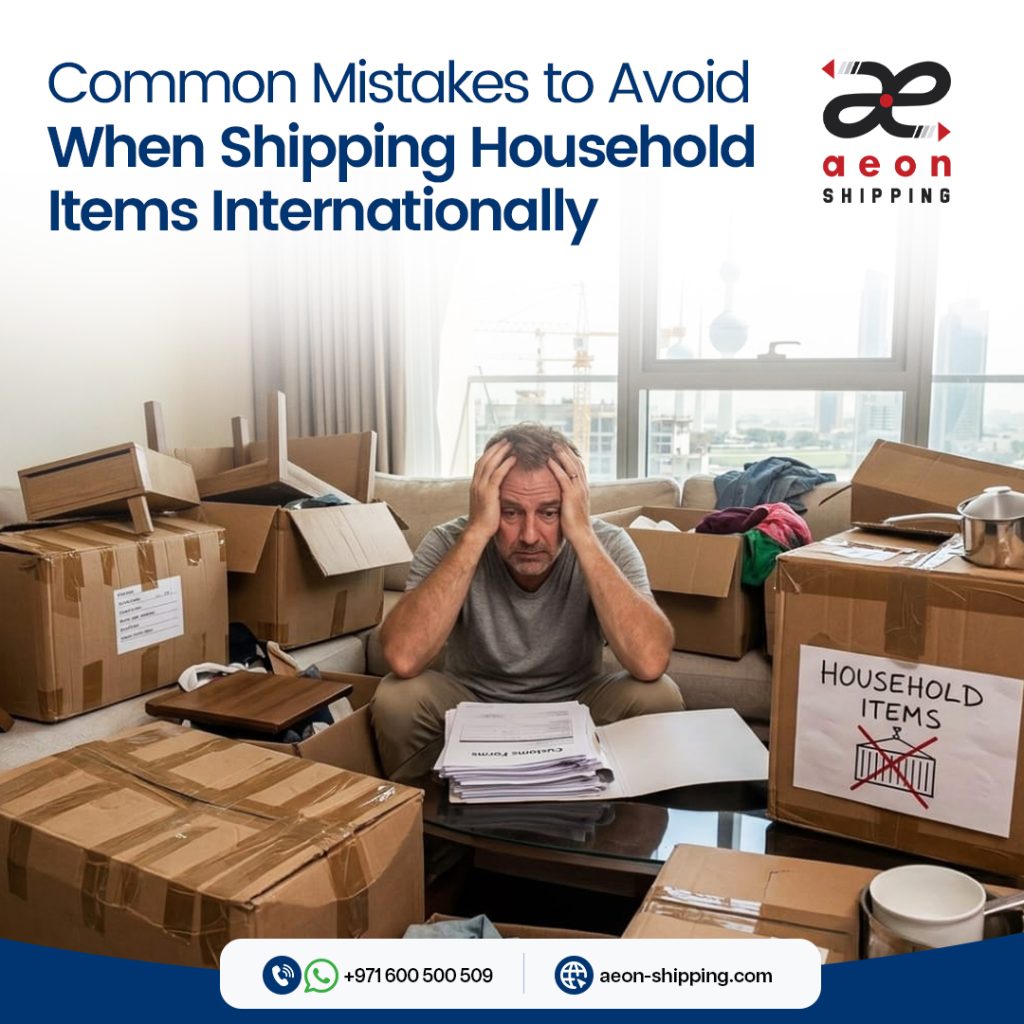
Are you planning to ship household items from Dubai to your new place overseas? Yeah, I know that feeling. International moves are no joke. Make one wrong move and boom—damaged furniture, customs fees that make your eyes water, or your stuff sitting in some random warehouse in Rotterdam for three months.
Here’s the good news. Most of these horror stories can be completely preventable. We’re talking about simple mistakes that people keep making over and over. This guide will walk you through the biggest mess-ups and show you exactly how to avoid them. Packing disasters, paperwork headaches, insurance traps—all of it.
The DIY Packing Trap (And Why It Usually Ends Badly)
Okay, so professional packing costs money. I get it. You’re already haemorrhaging cash on the actual shipping, and those packing quotes feel like highway robbery.
But listen to what typically goes down. You hit up the grocery store, grab whatever boxes they’ve got. Toss in grandma’s vintage china set with three sheets of bubble wrap. Ship it off, pat yourself on the back for saving a few hundred dirhams. Six weeks later, that teapot she brought back from England in 1952 is in dust now. And the worst part is that your moving company won’t cover a single dirham. Most insurance policies straight-up exclude self-packed items.
Professional packers have done this thousands of times. They know heavy books go in small boxes. They wrap every wine glass separately. They don’t use a newspaper that bleeds ink everywhere. Books, clothes, bedsheets? Sure, pack those yourself. Get proper boxes and don’t make them too heavy. That antique mirror? Your laptop? Mom’s crystal collection? Let the pros handle it.
Paperwork Nightmares (Because Customs Doesn’t Do Vague)
Your Inventory Needs Details
So your shipment’s sitting at customs. Been there for two weeks. Know why? Your inventory says “kitchen stuff.” Yeah. That’s not gonna fly. Customs officers are naturally suspicious. When they see vague descriptions, they assume the worst. “Kitchen stuff” could be anything. They’re gonna open it up and have a look. Which means delays. You need specifics. Don’t write “electronics.” Write “Samsung 55-inch LED TV, model UN55TU7000, serial XYZ123.” Not “decorations”—write “set of 4 brass candlesticks, approximately 8 inches tall each.” Get accurate weights, too. Wrong dimensions = wrong quote = surprise bills.
Missing Forms and Angry Customs Officers
Different countries want different paperwork. Incomplete customs forms can get your stuff seized or hit you with massive fines. One person I know shipped to France and got slapped with a €1,000 customs charge on items that weren’t even supposed to be taxed. The documentation wasn’t right. The moving company didn’t help. Just said “pay it, or you’re not getting your stuff.” Either research your destination’s requirements thoroughly, or hire a freight forwarder who knows this stuff inside out.
That $500 Limit? Yeah, It’s Real.
Ready for some bad news? Most people think that if their stuff gets damaged or lost at sea, the shipping company will reimburse them. Full value, right? That’s what insurance is for!
Wrong. So wrong.
International maritime law—and I wish I were making this up—caps carrier liability at $500 per container. Doesn’t matter if you’re shipping AED 20,000 worth of furniture. It all comes down to five hundred bucks. That’s it. And even that’s only if you can prove they screwed up. Storm at sea? Acts of God? Not covered. So you could literally lose everything and still get back enough money to buy a cheap laptop? Maybe a used TV? Feel sick yet? You should.

Getting Real Coverage (Please Do This)
This is where marine cargo insurance comes in. And no, it’s not optional. It’s absolutely essential.
You need coverage for the full replacement value of your shipment. Actually, get 10-20% more to cover random fees and costs that always pop up. The premium runs about 1-5% of your declared value. So insuring AED 50,000 of stuff might cost you AED 500 to AED 2,500. Seems like a lot, right? But would you rather pay that, or risk losing fifty grand? Make sure you actually read the policy. What’s covered? What’s not? What’s the deadline for filing claims? Some policies have weird exclusions. Find out before you need to make a claim and discover your antique desk isn’t covered because of some obscure exclusion.
Cheap Materials = Expensive Mistakes
Used Boxes Are a Gamble You’ll Lose
Old boxes are already stressed. Load them up, stack heavy containers on top, send them on a six-week ocean voyage? They’re gonna give up. Plus, random boxes don’t stack well. Different sizes, different shapes. Wastes space, creates unstable loads. Buy proper double-walled moving boxes. They cost more upfront, but way less than replacing broken stuff.
When “Saving Money” on Bubble Wrap Backfires
Trying to save a few bucks on packing materials? Bold strategy but it won’t end well. Your stuff needs cushioning on all sides. Your shipment’s gonna get transferred multiple times, possibly hit rough seas, and deal with temperature swings. You need: real bubble wrap, packing paper, strong tape (multiple layers on seams), corner protectors for glass, and enough cushioning so nothing shifts. If stuff moves around in the box, it’s breaking. I’ve seen people save AED 100 on materials and end up with AED 5,000 in damaged furniture.
Time Bombs: Why Rushing Costs More
Starting to Pack Two Days Before? Oh No.
You know what happens when you start packing 48 hours before the container arrives? Chaos. You’re throwing stuff in boxes without thinking. Forgetting to wrap things. Making terrible decisions. Rushed packing leads to broken stuff. International moves need time. A month minimum. Two months is better. This gives you space to sort through everything, sell unwanted items, and pack carefully. Last-minute container bookings? Also expensive. Miss your sailing because you weren’t ready? You’re paying rebooking fees AND waiting weeks for the next ship.
Storage Can Wreck Your Stuff Too
Sometimes you need storage containers ready, but your new place isn’t. But regular storage in Dubai’s heat? Disaster waiting to happen. Heat and humidity can destroy furniture. Wood warps. Fabric gets mouldy. Need storage beyond three months? Temperature-controlled storage costs more but it’s cheaper than replacing your dining set.
What You Definitely Can’t Ship (Don’t Even Try)
Every country’s got a “no way” list. Items that are absolutely banned. And the list is totally different depending on where you’re going.
Common stuff that’s usually prohibited:
- Anything flammable, explosive, or chemical-ish
- Food that goes bad
- Plants and seeds (biosecurity’s serious business)
- Certain wood furniture, unless it’s been treated
- Ivory, turtle shells, coral—basically anything from endangered species
Living in Dubai, you especially need to watch out for alcohol restrictions. Loads of countries have strict rules or outright bans. Check before you pack that wine collection.
When “Personal Items” Look Too New
Shipping a bunch of electronics still in their original boxes? Ten identical items of something? Customs might think you’re importing stuff to sell, which triggers completely different rules and taxes. Commercial goods, they call it. If it looks brand new and ready for retail, expect questions. Stick to obviously used personal belongings when possible. Saves headaches.
Shipping from Dubai to Somewhere Humid? Think Ahead
Going from our dry desert climate to somewhere that’s basically a sauna year-round? Or maybe somewhere that actually snows? Your stuff needs special consideration. Leather goods might need extra protection in humid places. Wooden furniture can literally warp when hit with major temperature swings. Look up your destination’s climate before you pack. You might need moisture absorbers. Or you might realise some things just aren’t worth shipping at all. Sometimes it’s cheaper to sell and rebuy than to ship and repair.
Box Packing Fails
Too Heavy, Too Broken
Physics is real. A box that weighs 40 kilos? The bottom’s gonna give out. Keep boxes under 20 kg. Heavy stuff like books? Small boxes only. Weight distribution matters too. Heavy items at the bottom, light stuff on top. Don’t squash your ceramic vase under hardback books.
Empty = Vulnerable
Hollow items are weaker. Fill vases and pots with packing paper or bubble wrap. Gives them structure and uses space efficiently.
Labels Aren’t Optional
“Fragile.” “This Side Up.” “Glass – Handle With Care.” Without labels, movers don’t know what’s in your boxes or how to handle them. Label every box with the room, contents, handling instructions, and a box number. Prevents disasters and makes unpacking easier.
Picking the Wrong Way to Ship
Air Freight Isn’t Always Better
Air freight’s fast but insanely expensive for household goods. And sometimes air freight stuff gets damaged MORE than sea freight. Different handling process. Use air freight for small essentials you need immediately. Everything else? Sea freight.
Full Container or Shared Space?
FCL (Full Container Load) means the whole container is yours. More secure, less handling. LCL (Less than Container Load) means sharing with other shipments. Cheaper for smaller loads, but more handling means more risk. Got enough for a full container? Go for it. If not, LCL’s fine—just pack extra carefully.
Electronics and Appliances (The Voltage Thing)
Here’s something people forget until it’s too late. Dubai runs on 220V. The US? 110V. Ship your appliances without checking compatibility, and you might arrive to find nothing works. For most people, selling appliances here and buying new ones at your destination makes more sense. Cheaper than shipping, avoids damage, guaranteed to work with local power. If you DO ship electronics, prep them right. Fridge unplugged 24 hours before moving. Washing machine transport bolts reinstalled. Microwave turntable taped down. Check your device manuals for specific shipping instructions.
Not All Moving Companies Are Created Equal
Do Your Homework
Some international movers do this daily. Others are local companies partnering with others who do the international bit.
Ask questions:
- How many international moves yearly?
- Experience shipping to my specific destination?
- Customs clearance process?
- Insurance options?
- Claims policy and resolution time?
Cheap quotes mean nothing if they can’t deliver. Check reviews from real people. Verify licenses and insurance. Ask tough questions.
Customs Agents Are Worth It
Unless you enjoy bureaucratic nightmares, get someone to handle customs. Clearing items yourself—especially in a country where you might not speak the language? Absolute headache. Good customs agents know the rules, have contacts, and navigate the system smoothly. Worth every dirham.
Final Thoughts
Look, shipping your life overseas doesn’t have to be a disaster. But it does require planning. Start early—way earlier than you think. Get real about what you can pack yourself versus what needs professional hands. Don’t skimp on insurance or materials. And hire people who know what they’re doing. The mistakes mentioned in this article have cost people thousands in damaged goods, surprise fees, and stress. Learn from their pain or experience it yourself. I’d recommend the first option. Get proper boxes. Buy enough materials. Label everything. Research your destination’s rules. Get real insurance. Hire experienced movers. When your container arrives, and everything’s intact? When does customs clear without drama? You’ll be glad you did it right.
Safe travels. May your fragile items stay intact.

