
What do you think of ‘International car shipping’ is like? It’s trickier than it sounds, honestly. There’s logistics across different countries, customs paperwork (ugh), and you need someone who’s actually going to take care of your car—not just toss it on a boat. The upside? Totally manageable once you understand the process, which makes it so much easier. To ensure your car shipping process doesn’t turn into a nightmare, take a peek at this guide.
Why Do People Ship Cars Internationally?
Not everyone is up for shipping a car internationally. But what if you’re relocating overseas? Like if you’re in the military or moving abroad for work? Taking your car with you beats the hassle of selling it and buying another one. Pretty straightforward. Your car’s already paid off, you know its history, and replacing it in a foreign country might cost more. All of this, plus the sentimental value. The car that took you through college, on a big road trip, or maybe even a memorable cross-country move.
Car collectors and aficionados often use international shipping to hunt for rare vehicles. For example, did you just manage to find your favorite 1967 Mustang in Germany? You’ll need shipping. Spotted a JDM classic in Japan? Same deal.
Then there’s the practical side. Some people move to countries where importing a vehicle is cheaper than buying locally. Others return home after years abroad and want to bring their car back.
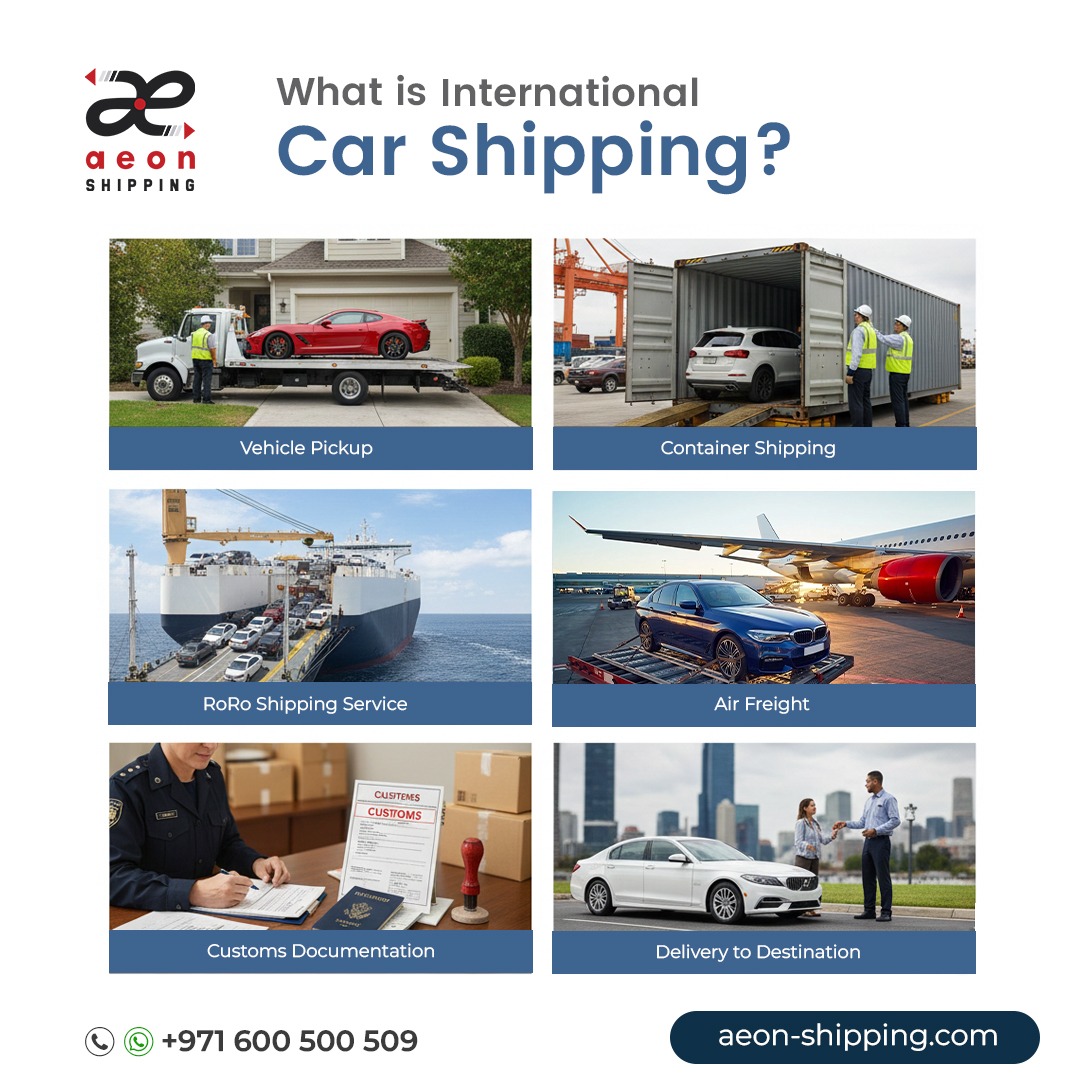
Car Shipping Methods Used by International Car Shipping Companies
Not all shipping methods are created equal. Most international car shipping companies offer multiple options, and each comes with its own price tag and protection level.
Container Shipping
This is the Fort Knox of car shipping. Your vehicle goes inside a steel container, either sharing space with other cargo or riding solo.
Shared Container (Less than Container Load – LCL)
Your car shares container space with other vehicles or cargo. Sure, you won’t have to shell out top dollar for this mode, but you will be on your way to the destination much more slowly. The closest comparison would be that of carpooling. But for Cargo Ships
Exclusive Container (Full Container Load – FCL)
Your car gets the whole container to itself. More expensive, sure. However, you receive increased protection and the opportunity to ship some individual belongings inside the car (check the rules anyway). An ideal car fits in a 20-foot container size-wise.
With bigger vehicles, space becomes a real issue. A 40-foot container simply reduces the risk of awkward positioning or minor exterior damage. And if you’re thinking about shipping two cars in the same container, you’ll need that extra length to fit both without cramming them in.
Roll-on/Roll-off Shipping (RoRo)
The cheapest option. The ship’s crew will drive your vehicle onto the ship and park it in the cargo. When it reaches the destination port, someone drives it off. Simple as that.
RoRo is cheaper because it’s efficient. No containers to load or unload. But your car sits exposed in the ship’s hold with hundreds of other vehicles. Can’t ship personal items inside either. Most shipping companies require your car to be operational for RoRo, as it needs to drive on and off the ship.
Air Freight
Got money to burn and need your car tomorrow? Air freight is the answer. It’s fast, secure, and eye-wateringly expensive. We’re talking 10 to 15 times the cost of ocean shipping.
Luxury car dealers, racing teams, and ultra-high-net-worth individuals use this method. For most people? Not worth it.
The International Car Shipping Process Step-by-Step
This is the process that involves many stages:
Getting Quotes and Selecting a Shipper
Start by contacting multiple shipping companies for quotes. Pricing can go from one extreme to another based on the route, the method, season & fuel. Don’t always pick the lowest quote – Check them out, see if they have a good reputation, read reviews, and rate their insurance.
Ask questions. Lots of them. What’s included? What’s extra? How long does it take? Will there be some penalties for damages?
Preparing Your Vehicle
Clean your car inside and out. It may sound weird, but most countries’ customs inspectors require you to show it’s free from soil, seeds, and pests. Remove all personal belongings (except what’s allowed in containers) and document existing damage with photos and videos.
Check fluid levels and tire pressure. Fix any leaks. Your car should be in a drivable condition for RoRo shipping. Some companies require the fuel tank to be only a quarter full for safety reasons.
The Documentation Process: What to Expect
International shipping means paperwork—lots of it. It sounds overwhelming. However, it’s totally manageable.
You’ll need:
- Original vehicle title
- Bill of sale or purchase invoice
- Government-issued ID or passport
- Shipping company’s bill of lading
- Destination country’s import permit
- Customs declaration forms
Certain countries even demand additional paperwork to the above list – for example, emissions certificates, safety compliance letters, or proof of ownership history. Research the requirements of your destination country sooner, rather than later. Last-minute scrambling for documents delays everything.
Customs Clearance and Its Impact on International Car Shipping Cost
Both departure and arrival ports involve customs. Now, this can be a real hell-hole, particularly in some countries where there is a huge language barrier, rules are ambiguous and constantly changing, and you end up having to run your shipment through customs yourself. But worry not. Because your shipping company can handle this on your behalf, or you might need a customs broker. Regardless, realize that inspections will occur, and you could be hit with duties or taxes.
Import duties vary dramatically. Some countries charge 50% or more of the vehicle’s value. Others have free trade agreements that reduce or eliminate fees. Factor this into your budget from the start.
Delivery and Inspection
Once cleared, your car either gets delivered to your address or you pick it up from the port. Inspect it immediately. Check for damage, compare against your pre-shipping photos. If something’s wrong, document it right away and notify the shipping company.
International Car Shipping Cost
Let’s talk about money because this isn’t cheap.
Base Shipping Costs
The cost of ocean transport for a standard sedan ranges from $1,000 to $5,000, depending on the method and distance. Going from California to Australia? RoRo is at large in the $1,500- $2,500 range. However, if you would like to have a container on the same trip, you will need to dish out
Routes between Europe and North America cost about the same. In contrast, routes to or from Asia, the Middle East, or Africa vary more widely depending on port infrastructure and service frequency.
Additional Fees That Add Up
Port fees at departure and arrival can add $200 to $500. Insurance runs 1.5% to 3% of your car’s declared value. Customs broker fees range from $100 to $500. Then there are documentation, inspection, and quarantine fees in some countries. And don’t forget import duties and taxes at the destination. These can dwarf the shipping cost itself.
Hidden Costs Nobody Warns You About
Storage fees if you don’t pick up your car quickly. In the event that customs clearance takes excessively long, you can expect to pay demurrage charges. Taxes include the cost of making modifications to meet local safety or emissions standards. Also, add the cost of new registration and license plate fees. So as you can see, when you’re budgeting, budget at least 20% more than quoted shipping costs to cover and surprise fees.
Timeframes: How Long Does It Actually Take?
Patience is required. International car shipping isn’t Amazon Prime.
Ocean shipping typically takes 2 to 8 weeks, depending on distance and route frequency. California to Australia? About 3 to 4 weeks. East Coast US to Europe? 2 to 3 weeks. Routes with fewer ships might involve waiting for scheduled departures.
For customs clearance, allow an additional 1 to 2 weeks. The other time to take into account is peak seasons, where you’ll incur a few more days delay.
Total door-to-door timeline? Plan for 6 to 12 weeks. Sometimes faster, other times slower. Don’t ship your only vehicle right before you desperately need it.
Common Challenges and How to Avoid Them
Documentation Issues
Missing or incorrect paperwork causes most delays. Triple-check everything. Have documents notarized if required. Make copies of everything.
Vehicle Modifications Required
Your car might not meet the destination country’s standards. Left-hand drive cars in right-hand drive countries, or vice versa. Emissions and safety features included—research requirements months in advance.
Some countries ban certain vehicles. Japan doesn’t allow most foreign cars without expensive modifications. Australia has strict compliance rules.
Damage During Transit
Scratches, dents, and broken windows happen. Comprehensive marine insurance is non-negotiable. The shipping company’s basic liability usually covers only about $500. That won’t fix much on a modern car.
Customs Delays and Fees
Bureaucracy varies by country. Some process vehicles in days. Others take weeks. You can’t control it, but you can prepare by having all documents ready and funds available for unexpected fees.
How AEON Shipping Makes International Car Transport Easier
Really, the process of sending a vehicle abroad can be complex, to say the least, because with all the different carriers, customs laws, and paperwork requirements, it’s a challenge to get everything right.
AEON Shipping handles the entire process from pickup to delivery. Door-to-door service means you don’t coordinate between different carriers or arrange terminal access. The company does ocean freight and customs brokerage, so you don’t have to hire a separate customs agent.
When your vehicle is shipped, real-time tracking shows its location in transit. No calling different companies, trying to piece together information. Insurance options go beyond basic liability and actually cover your car’s value.
Experience with different destination countries means knowing specific requirements beforehand. Whether it’s Australia’s strict biosecurity rules or Europe’s emissions compliance, you get guidance on preparing your vehicle properly the first time.
Choosing the Right International Car Shipping Companies
Not all car shippers are equal. Some specialize in certain routes or methods. Others handle everything but nothing particularly well.
What to Look For?
- Check how long they’ve been in business. Companies that have operated for decades have survived for a reason. Look at their online reviews on multiple platforms. One bad review might be a fluke. Patterns of complaints mean problems.
- Verify licensing. The Federal Maritime Commission (FMC) registers ocean freight forwarders in the US. Other countries have similar regulatory bodies. Make sure your shipper is licensed correctly.
- Ask about their network. Do they own vessels or act as a broker with carriers? What happens if something goes wrong? Who do you contact?
Red Flags to Avoid
Extremely low prices often mean hidden fees later or poor service. If a quote seems too good compared to competitors, it probably is.
Companies requiring full payment upfront before shipping should raise concerns. Standard practice is to require a deposit with the balance due before delivery.
Vague answers about insurance, timelines, or processes suggest inexperience or dishonesty. Reputable shippers explain everything clearly.
Insurance: Don’t Skip This Part
Your regular car insurance doesn’t cover ocean transit. Marine cargo insurance does. But coverage levels vary.
Basic carrier liability covers minimal amounts per pound of cargo. Your 3,000-pound car with $ 200-per-pound coverage? That’s only $6,000 maximum. Not enough for most vehicles.
All-risk marine insurance costs more but covers damage from accidents, weather, theft, or mishandling.
Named perils insurance is cheaper but only covers specifically listed risks.
Read the fine print. Some policies exclude certain types of damage or have high deductibles. Declare your car’s accurate value. Under-declaring to save on insurance premiums means getting shortchanged if you need to claim.
Environmental and Seasonal Considerations
Ocean shipping has an environmental impact. Cargo ships emit significant CO2. Some shipping companies now offer carbon offset programs. But whether that actually matters to you is totally up to your own personal values.
Peak moving seasons, such as summer, mean high freight rates and ships overbooked for days on end. Interestingly, though, off-peak times offer discounts or minimize transit time.
Typhoon season affects Pacific routes. Winter storms impact Northern routes.
Peak moving months (summer) equal high prices and vessels at full capacity. We usually save money and may cut offshore time when shipping off-peak assistance.
Final Thoughts on International Car Shipping
Taking your car across an ocean is difficult, expensive, and can also require a lot of patience. That said, it is quite possible with a little knowledge of how it’s done.
Research destination requirements early. Make sure to budget correctly, including duty and fees. Select a q. Choose a reputable shipping company even if it costs slightly more. Get proper insurance. Prepare your vehicle correctly. Have all documentation ready. And remember, delays happen. Ships face the weather. Customs gets backed up—ports experience congestion. Build buffer time into your plans.
Your car will arrive. Maybe with a few new stamps in its service history and definitely with some interesting stories. But it’ll be there, ready for whatever adventures await in its new country.

