

So you’re moving and looking for shipping household goods abroad? Exciting times ahead! But now comes the big challenge—getting all your belongings from point A to point B. Do you put everything on a ship or fly it over instead? This decision is crucial because it dictates your total moving costs, how many weeks you’ll wait for your delivery, and how much stress you’ll face during the transition. Ultimately, choosing the right method is about balancing your budget against how quickly you need to settle into your new home.
What You Need to Know About Sea Freight for Shipping Household Goods Abroad
When people talk about sea freight, they mean loading your belongings into those massive shipping containers you see stacked on cargo ships. You’ve got two main options here. If you’re moving a whole house – multiple bedrooms, living room furniture, kitchen appliances, everything – you’d book what’s called a Full Container Load (FCL). That entire container is yours alone.
Moving just a studio apartment or selected items? That’s where Less than Container Load (LCL) becomes useful. Your belongings share container space with other people’s shipments, which brings costs down considerably. Containers are huge, which is their biggest advantage. That grandfather clock you inherited? The dining table that seats ten people? Heavy wardrobes that took three people to move into your current place? Sea freight can handle all of it without any issues.
How Air Freight Actually Works
Moving your belongings by air is a straightforward process. Your household items are packed into specialised airline containers and loaded onto either commercial or dedicated cargo planes. Once the flight lands, your goods pass through airport customs and are delivered straight to your new home. This method is the perfect choice when you are on a tight schedule, such as starting a new job, or getting your children settled into school before the first bell rings.
The main factor to consider is how the weight and size of your shipment impact the price. While air travel is the fastest option, it is generally more expensive than moving by sea because you are paying for speed and premium space. For a small shipment, like the contents of a one-bedroom apartment, the costs are often manageable. However, as the volume of your goods increases, the price can rise significantly. Despite the higher cost, many people find it worth the investment for the extra security it provides for valuable items like electronics or important family documents.
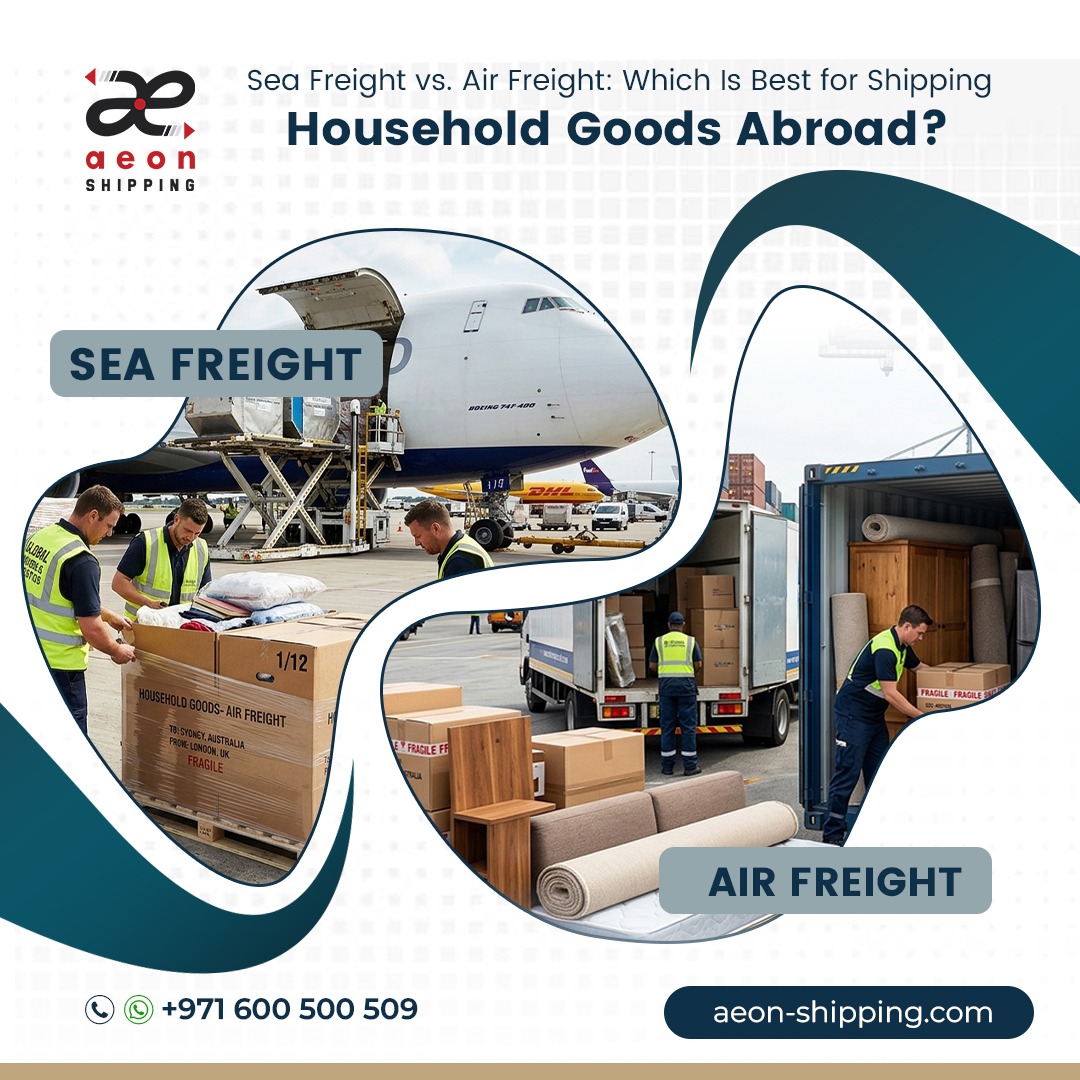
The Speed Factor: How Long Will You Wait?
Let’s get real about timing. If you ship by air, you’re looking at anywhere from 1 to 7 days for your stuff to fly across continents. Add customs processing and local delivery, and most air shipments arrive within 1-2 weeks total. Pretty quick, right?
Sea freight? That’s a different story. Your belongings will spend 20 to 45 days crossing oceans, depending on where you’re headed. When you factor in everything – port handling, customs, ground transportation to your door – you’re waiting roughly 8-10 weeks. Why so long? Ships make multiple stops, cargo gets transferred between vessels and trucks, and ocean voyages simply take time.
Let’s Talk Money
This is where things get interesting. Air freight costs a fortune compared to ocean shipping. We’re not talking a little bit more – the World Bank found that air freight runs 12-16 times more expensive than sea freight. Imagine spending $195 to ship something by sea. That same shipment could cost over $1,000 by air.
Most airlines will hit you with charges around $4.65 for every kilogram. Now think about moving household goods – you’re looking at hundreds of kilos easily. Do the math on that. The costs pile up scary fast. Sea freight works differently. They are either priced by container or by cubic meters (CBM), and for big moves, this approach saves you serious money. Shipping from India? Between these two shipping options, you could be looking at a difference of ₹2,00,000 or even higher. What does pricing actually look like? Ocean FCL usually costs anywhere from $50 to $150 per cubic meter. Going with LCL? Expect to pay between $100 and $250. Air freight is where things get expensive – you’re talking $200 to $500 range.
How Much Can You Actually Ship?
Shipping containers are huge. That’s the simple truth. You can load entire households into them – sofas, beds, wardrobes, kitchen tables, boxes and boxes of books, appliances, everything. Got an oddly shaped item? An oversized mirror? Bulky sports equipment? Sea freight doesn’t care. There aren’t really size restrictions that’ll stop you.
Aircraft cargo holds? Not so forgiving. Weight matters tremendously, and dimensions matter too. That beautiful sectional sofa from your living room? The king-size bed frame? Your washer and dryer? These become impractical or impossibly expensive to fly. The weight limits on planes mean you’ll pay through the nose if you try shipping heavy household goods by air.
Safety and Reliability When Shipping Household Goods Abroad
Both options keep your belongings safe, though the handling process differs between them. Air freight sticks to tighter schedules and runs into fewer delays. Transit happens faster with planes, and your items get handled less often along the way. This means less chance of anything getting damaged or lost. Your cargo moves swiftly from one airport to the next.
Sea freight is still safe overall, but there are more moving parts – literally. Your container gets loaded onto a ship, might transfer to another vessel, goes through port handling, gets loaded onto trucks. Each step adds a tiny bit of risk. Weather at sea occasionally causes delays, too. That said, modern container shipping has excellent tracking systems and security measures protecting your belongings throughout the voyage.
What Should Go Where?
Pack These for Air Freight
Some items just make sense to fly. A few weeks’ worth of clothes you’ll need right away should definitely go by air. Documents for work or school? Send those by plane. Basic kitchen stuff so you can actually cook once you get there – pots, pans, a few utensils. Traveling with babies or toddlers? Their essentials have to fly with you or show up fast.Personal items you cannot function without for two months? Air freight is your friend.
Save These for Sea Freight
The bulk of your household should sail across. All your furniture, home décor, those statement pieces you love – they go by sea. Books, extra clothing, shoes, linens, towels – containers can handle it all affordably. Kitchen appliances that aren’t urgent, like your fancy coffee maker or blender, travel economically by ocean. Bicycles, treadmills, weights, yoga mats – recreational equipment ships best by sea. Basically, anything bulky that you don’t need immediately belongs in a container.
Consider this: ships produce 44 times less CO2 than planes for the same cargo. Sounds wild, but it’s true. Those massive container vessels look like pollution monsters, yet they’re actually pretty efficient when you’re moving tons of stuff across oceans. Planes, though? They guzzle fuel like crazy just lifting weight into the air and keeping it there for hours.
Care about emissions? A lot of folks do now. Ocean routes win by miles on the environmental side. Shipping lines have been making changes too—cleaner fuels, better engines, route optimizations. Choose sea freight and you’re legitimately reducing the carbon hit from your move.
Dealing With Customs
Both need customs clearance when they arrive. But the rules differ a bit. Sea cargo usually has looser restrictions than air. Flying stuff means dealing with aviation security rules—they’re picky about what goes on planes. Anything that could be remotely dangerous or mess with flight safety gets flagged or rejected.
You’ll still need all the paperwork either way. Detailed lists of what you’re shipping, customs forms, proof of what everything’s worth. This part trips people up constantly. Working with shippers who’ve done this a thousand times—like Aeon-Shipping—makes a difference. They know which forms matter and how to fill them out so your stuff doesn’t sit in a warehouse for weeks.
The Best of Both Worlds
Many smart movers use a hybrid approach. Send immediate necessities by air, ship everything else by sea. You get the comfort of having essential items when you land, while still saving substantial money on your main shipment. This strategy works brilliantly for families relocating for work or education where you need certain things immediately but can wait for furniture.
Just divide your possessions into “need now” and “can wait” categories. Each category goes via the method that makes most sense. It’s practical and cost-effective.
How to Actually Decide
Go With Sea Freight If:
Ocean shipping makes perfect sense when you’re moving a proper household with multiple rooms of furniture. Bulky goods that would cost a fortune to fly? Definitely ship them. When you can plan ahead and wait a couple months for delivery? Sea freight all the way. Budget-conscious moves benefit enormously from ocean rates. Non-urgent relocations with flexible timelines are ideal for sea shipping.
Choose Air Freight If:
Air shipping becomes necessary under specific circumstances. Your timeline is extremely tight and you need belongings fast. You’re only shipping a small volume that fits within weight restrictions affordably. You need essentials quickly after arriving at your destination. Urgent relocations connected to job start dates or school admissions often require air. High-value or fragile items needing careful handling and minimal transit time benefit from flying.
Aeon-Shipping works out of three spots that actually make logistical sense. Dubai sits right between Asia, Africa, and Europe—everything passes through there. The ports and airports can handle pretty much any volume you throw at them, whether it’s sailing or flying.
India’s got ports everywhere. Mumbai, Chennai, Kolkata—ships leave these places heading to basically every corner of the planet. The airports there move serious cargo volumes, too. We use these connections daily.
Colombo in Sri Lanka? One of the busiest container ports in South Asia. Ships from all over stop there. Being in these three places means we’ve got access to established shipping lanes, better rates because of volume, and services that actually run on schedule. Doesn’t matter if you’re shipping by water or air—these locations give us real advantages that we pass along to you.
Making Your Choice
Your personal situation determines everything. Be honest about your timeline – can you genuinely wait several weeks, or do you need items immediately? Look at your budget realistically. How much can you allocate to shipping versus other moving expenses? Assess what you’re actually moving. A large household with furniture definitely benefits from sea freight’s capacity and pricing.
Consider what you absolutely need upon arrival versus what can wait. Many successful international moves strategically combine both methods, ensuring essentials arrive quickly while saving significantly on the bulk shipment.
Working with experienced international shippers like Aeon-Shipping helps tremendously. Professional movers understand customs regulations, proper packing techniques, and optimal routing for your specific move. They provide accurate quotes for both methods, explain realistic timelines, and help determine the most cost-effective approach for your household goods. Whether you choose sea freight, air freight, or combine both, partnering with knowledgeable professionals ensures your belongings arrive safely at your new home abroad.

