
So you got the job! London! (Or Toronto—wherever!) You’re beyond excited. But then it hits you.
Wait. How am I actually going to move everything?
We’re talking about all your furniture. That gorgeous antique mirror you haggled for at the souk. The kids’ stuffed animals they absolutely cannot live without. Your Persian rug that ties the whole living room together. How can I ship all of it across an ocean?
And somehow you need to make this happen without completely stressing out or emptying your bank account.
Yeah, shipping household goods overseas sounds like a total nightmare. And look, it can be if you go in blind. Otherwise, it’s much simpler than you can imagine. Let me guide you through this entire process. All the way from giving that initial call to unboxing the boxes in your new place.
Why This Matter for Dubai Residents?
Look, Dubai is a transient city. People are always moving in and out. About 85% of Dubai’s population are expats. Many eventually relocate again. Whether for better opportunities, family reasons, or to return home.
When you’ve spent years building a life here, you accumulate stuff. I mean the Good stuff—things you actually want to keep.
The challenge? Getting all that stuff to wherever you’re headed next. It’s not just packing things up either. You’ve got customs forms, shipping rules, and insurance when shipping household goods overseas. It’s decision after decision.
Ship by sea or air? What about that wooden furniture—will it pass quarantine checks? Can you even bring in your electronics?
Take a breath. Let’s break this down step by step.
Getting a Survey and an Estimate
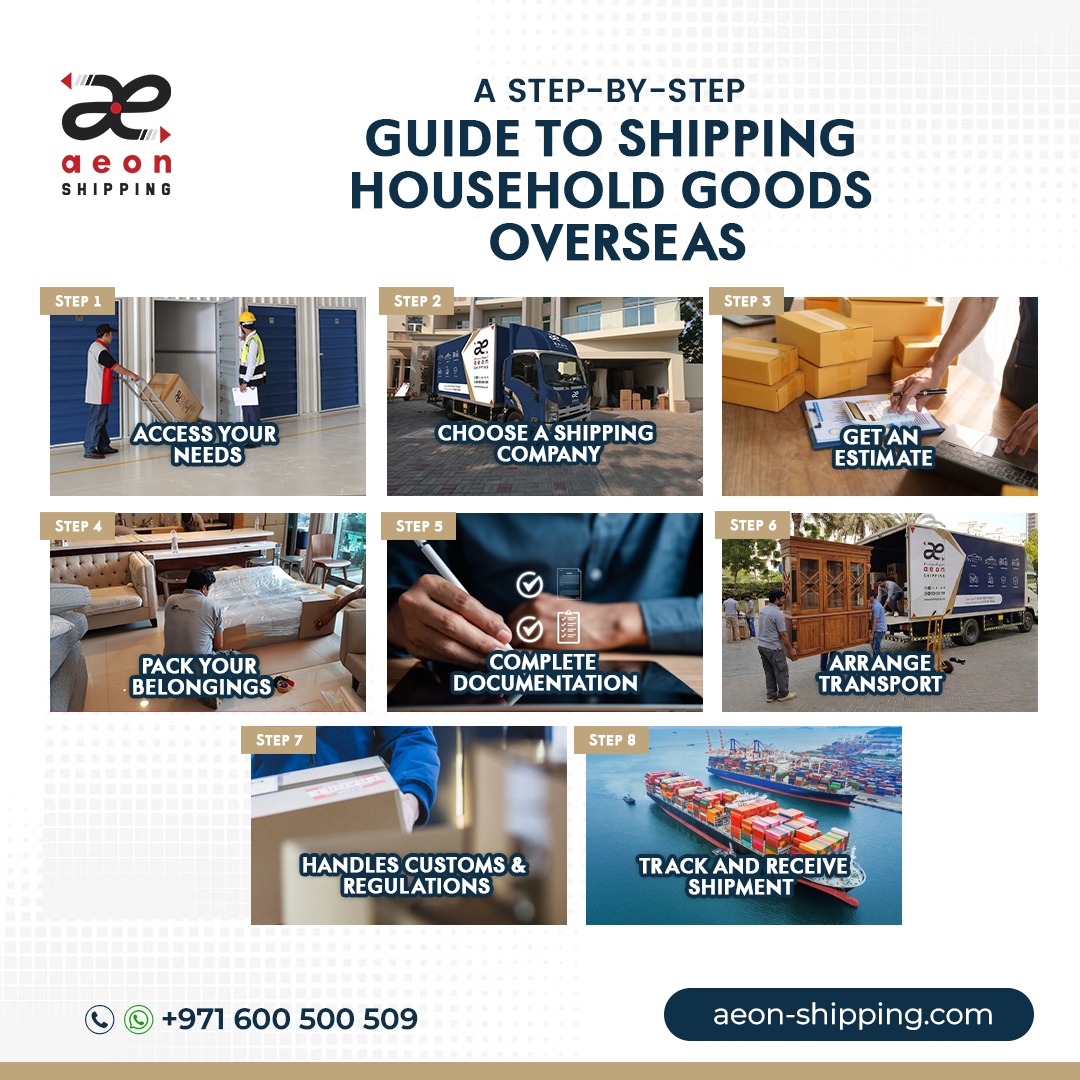
First things first. Don’t try to eyeball this yourself. Professional moving companies offer pre-move surveys. You should absolutely take them up on it. A surveyor will come to your home, or you can book a video call. Walk through every room. Assess exactly what you’re shipping. They’ll look at everything. From your dining table to that collection of decorative plates.
Why do surveys matter? You pay based on how much space things take up (or their weight). That bookshelf? Once it’s packed up properly, it’ll be way bulkier than you’d expect. So when the surveyor comes, be upfront about everything. Show them everything you plan to take. Including the garage items. And that storage unit you’re renting. A good surveyor will also spot potential problems. Like items that might not be allowed into your destination country. Or things that need special handling when shipping household goods overseas .
Most reputable companies in Dubai offer free surveys. Use them. At this stage, you’ll be quoted total costs: packing, shipping, insurance and charges at the other end. Get at least three quotes. Now, contrast them carefully. The less expensive option is not invariably the right one, with a very precious cargo such as your grandmother’s china.
Preparation and Inventory Management
Here’s where the real work begins.
Start early. And I mean really early. At least 8-12 weeks before your move date. Say you have a whole house to ship. Allow more time to sort things out, and say goodbye to possessions you may or may not want to ship.
Create an inventory list. Write down everything you’re taking. Every Single Thing. This isn’t just for your peace of mind. Customs officials will want to see it. You’ll also need it for insurance purposes. Many shipping companies provide inventory forms. A spreadsheet works fine, too.
Here’s a pro tip: Photograph your valuables before packing them. That way, if something breaks during shipping, you’ve got evidence. My colleague Sarah did this, and it saved her heaps when her antique desk showed up scratched during the transit.
Sort your belongings into categories:
- Definitely taking: Essential items like valuable furniture and sentimental pieces. Things that would cost more to replace than to ship.
- Maybe taking: Items you’re on the fence about. Calculate the shipping cost versus the replacement cost. Sometimes it makes more sense to sell and buy new at your destination.
- Not taking: Old furniture, and heavy items with low value. Also, the things that won’t work in your new country, like electronics with incompatible voltages. Check for restricted items in your destination country as well.
Be ruthless. That heavy old sofa you got for cheap on Dubizzle five years ago? It might cost 2,000 dirhams to ship, but only 500 to replace. Do the math.
Documentation Checklist for Shipping Household Goods Overseas
Buckle up. This is the part most people underestimate.
Shipping household goods overseas internationally involves serious paperwork. Miss a document and your belongings could sit in a warehouse for weeks while you try to sort it out from another country. And thanks to time zones, you might find yourself making customer service calls at 3 AM Dubai time. Fun times.
Essential documents you’ll need:
- Valid passport copy: For everyone in your household whose name appears on the inventory.
- Residence visa or work permit for your destination country: Most countries won’t allow you to import household goods without proof you’re actually moving there.
- Detailed inventory list: Usually in English. Itemised by room and box number. Some countries want values listed, too.
- Packing list from your moving company. This is separate from your personal inventory.
- Bill of lading or airway bill. This is your shipping contract and proof of shipment.
- Insurance certificate. More on this later. But get it.
- Customs declaration forms. Your destination country will have specific forms. Your shipping company should help with these.
- Certificate of ownership for valuable items. Especially for antiques, artwork, or jewellery.
- Import permits for restricted items. Some countries require permits for things like wooden furniture, pest concerns, or certain electronics. Country-specific requirements vary wildly. For example, Australia is notoriously strict about wooden items. They need fumigation certificates. Canada has restrictions on certain foods. The UK requires detailed descriptions of used household goods.
Do your homework. Or better yet, work with a shipping company that knows the rules.
Expert Packing and Loading
You might think you can pack everything yourself. After all, you may have moved apartments within Dubai or the UAE before.
But international shipping is different. Journey begins. Everything goes into a shipping container, which is loaded onto a ship. At the other end, they take it off, load it onto trucks, and deliver it to your door.
Think about that. Your possessions will be handled multiple times. And they get exposed to temperature swings, moisture, and constant bumping around. Trust me, professional packing is worth it. Here’s why:
- Professional packers don’t mess around with materials: We’re talking double-walled boxes, custom crates for furniture, and special wrapping for electronics. Not just whatever you picked up at Carrefour. Plus enough bubble wrap to keep you entertained for days.
- They know how to pack for survival: Dishes get wrapped individually. Then bundled together with cardboard separators. Glassware goes in specialised boxes with cell dividers. Furniture gets wrapped, padded, and sometimes completely crated. Your flat-screen TV? That’s going in a custom wooden crate.
- They understand weight distribution. Containers need to be loaded strategically. Heavy items are at the bottom, and fragile items are appropriately secured in place. And available space is filled to prevent shifting. A poorly loaded container can cause everything to topple over mid-ocean.
- They label everything properly: Each box gets numbered and logged. Good packers create a detailed manifest. Showing exactly what’s in box 127 versus box 128. Trust me, you’ll appreciate this when unpacking.
- Insurance is non-negotiable: Most movers offer basic coverage. But it’s usually minimal. Often just 60 cents per pound. For international moves, upgrade to full replacement value insurance. Yes, it costs more. But when your entire life is floating across the ocean, it’s money well spent.
Shipping Methods: Making the Right Choice
You’ve got two main options. Sea freight or air freight. Sometimes a combination of both.
Sea freight is what most people use for full household moves. It’s economical for large volumes. There are basically two container sizes. A 20-footer fits about 30-35 cubic meters of stuff. The 40-footer? Roughly double – say 65-70. For a regular 2-bedroom place in Dubai, you’re probably looking at 25-30 cubic meters.
The downside? Time. Shipping from Dubai to the UK takes 4-6 weeks. To Australia? 6-8 weeks. To North America? 5-7 weeks. Add another 2-3 weeks for customs clearance and final delivery.
You can choose exclusive use. That’s where your stuff fills the entire container. Or shared/consolidated shipments. Where your boxes share container space with other people’s belongings. Exclusive is more expensive. But faster and safer. Shared is cheaper but adds time and a slight risk of mix-ups.
Air freight is fast. Dubai to London? About 7-10 days door-to-door. But it’s expensive. Sometimes, it is 5-6 times the cost of sea freight. Most people use air freight only for essential items they need immediately: important documents, some clothes and a few small valuables.
A smart strategy? Ship most stuff by sea while using air freight for the essentials. Your great-great-grandmother’s jewellery probably shouldn’t go by sea anyway.
The numbers are important here. According to international moving industry data, approximately 90% of household goods shipments from Dubai go by sea freight, due to cost considerations. But about 40% of those people also airship selected items.
Customs Clearance at the Destination
This is where things get interesting. And by interesting, I mean potentially frustrating.
Every country has its own customs regulations. And they take them seriously. The general rule: used household goods and personal effects are usually duty-free if you’re genuinely relocating. But there are always conditions.
Most countries in Europe, for example, require you to have lived in your previous location for a minimum period—usually 12 months —to qualify for duty-free import of used household goods. You’ll need to prove this with visa stamps or residence permits.
The inventory matters. Customs officers might physically inspect your shipment. If your inventory says ‘clothes’ but the box contains a brand-new laptop? There could be problems. So be accurate and honest.
Some items trigger automatic inspections, such as alcohol, electronics, and wooden furniture. Food items, plants and anything that looks commercial rather than personal. That bulk pack of 50 phone chargers you thought you’d bring? That might look like you’re importing for resale, which is a whole different ball game.
Every country bans different stuff. Weapons, drugs, hazardous materials – yeah, obviously. But you’d be surprised what else makes the list. Some places won’t let you bring wooden furniture (invasive species), used mattresses (hygiene), satellite dishes, certain foods, the list goes on.
Your shipping company should handle most of the customs paperwork. But you might need to be available for questions. Customs clearance can take anywhere from a few days to several weeks. It varies from country to country, though.
Pro tip: Keep digital copies of all your documents accessible online.
How AEON Shipping Can Help You with Your Move
Look,shipping household goods overseas is stressful enough without having to become an overnight logistics expert.
That’s where AEON Shipping comes in. We’re based in Dubai and specialise in international relocations. AEON understands precisely what you’re going through. They’ve helped hundreds of families and individuals move from Dubai to destinations across the globe.
What makes them different? Experience with Dubai-specific requirements. We know the UAE export regulations inside out as well as the unique challenges of moving from this region. From the heat considerations for sensitive items to the paperwork required for customs clearance.
AEON offers complete door-to-door service. We handle everything. From initial survey and packing to customs clearance at your destination. And final delivery. You get a dedicated move coordinator who serves as your single point of contact throughout the process.
Our network spans over 180 countries. Whether you’re moving to Melbourne, Manchester, or Montreal, we’ve got established partners and agents who are familiar with local regulations. Thus, we make the delivery process smoother.
We also provide transparent pricing with no hidden fees. You get a detailed quote upfront that breaks down every cost. Moreover, we provide flexible payment options tailored to international relocations.
Most importantly? We offer comprehensive insurance options and secure packing using quality materials. Your belongings aren’t just thrown in boxes. We protect them as if they were our own belongings.
And if something goes wrong? Our customer service team is responsive and actually helpful. Because problems do happen in international shipping, and when they do, you want someone who’ll sort it out quickly.
Wrapping It Up
Look, shipping household goods overseas from Dubai isn’t as scary as it sounds. Yeah, there’s planning and paperwork involved. But start early, hire good movers, and tackle it step by step – you’ll get through it just fine.
Remember the key points: Get professional surveys and multiple quotes. Create detailed inventories. Gather all necessary documents early. Invest in professional packing. Choose the shipping method that best suits your needs and budget. Understand the customs requirements of your destination country. And get proper insurance.
Your move is a fresh start—a new adventure. Don’t let the logistics of getting your stuff there overshadow the excitement.
Your new chapter awaits. Let’s get your belongings there safely.

