
International Shipping Insurance can protect a car or household goods. The cover applies while they travel overseas. Careful packing and a skilled shipping company lower the chance of damage. They cannot remove every risk from a long journey.
Goods may move by road before reaching a port. They can also pass through yards, ships and local storage areas. The right plan may cover many parts of that journey. The exact cover will depend on the plan they choose.
The cover is not the same for every shipment. A home move may need a plan that differs from car cover. The value, packing method and route will also matter.
This guide keeps the key choices simple. It will help people ask better questions. They can compare cover and gather proof before the shipment leaves.
What is International Shipping Insurance?
International Shipping Insurance offers cover during an overseas move. It may help when goods are lost or damaged. The plan may apply while the shipment travels by road, sea or air. Some plans also cover loading, unloading and short periods at a port.
The cover begins and ends at points named in the policy. One plan may start when a shipping company collects the goods. Another may begin only after they leave a warehouse. You should check these limits before booking.
Cover does not prevent damage. Instead, it may fund a repair or replacement. It may also provide an agreed cash payment after an accepted claim. The payment depends on the plan terms and the value declared before shipping.
A shipping quote may include basic cover or offer a policy as an added service. Never assume that full cover comes with the transport price. Ask for the plan details and read them before the goods leave Dubai.
What does shipping insurance cover and exclude?
Cover changes between policies. Many plans protect against physical loss or damage caused by an accident during transport. Theft, fire and a lost shipment may also appear in the policy. Wider plans can include handling at the port and road transport at either end.
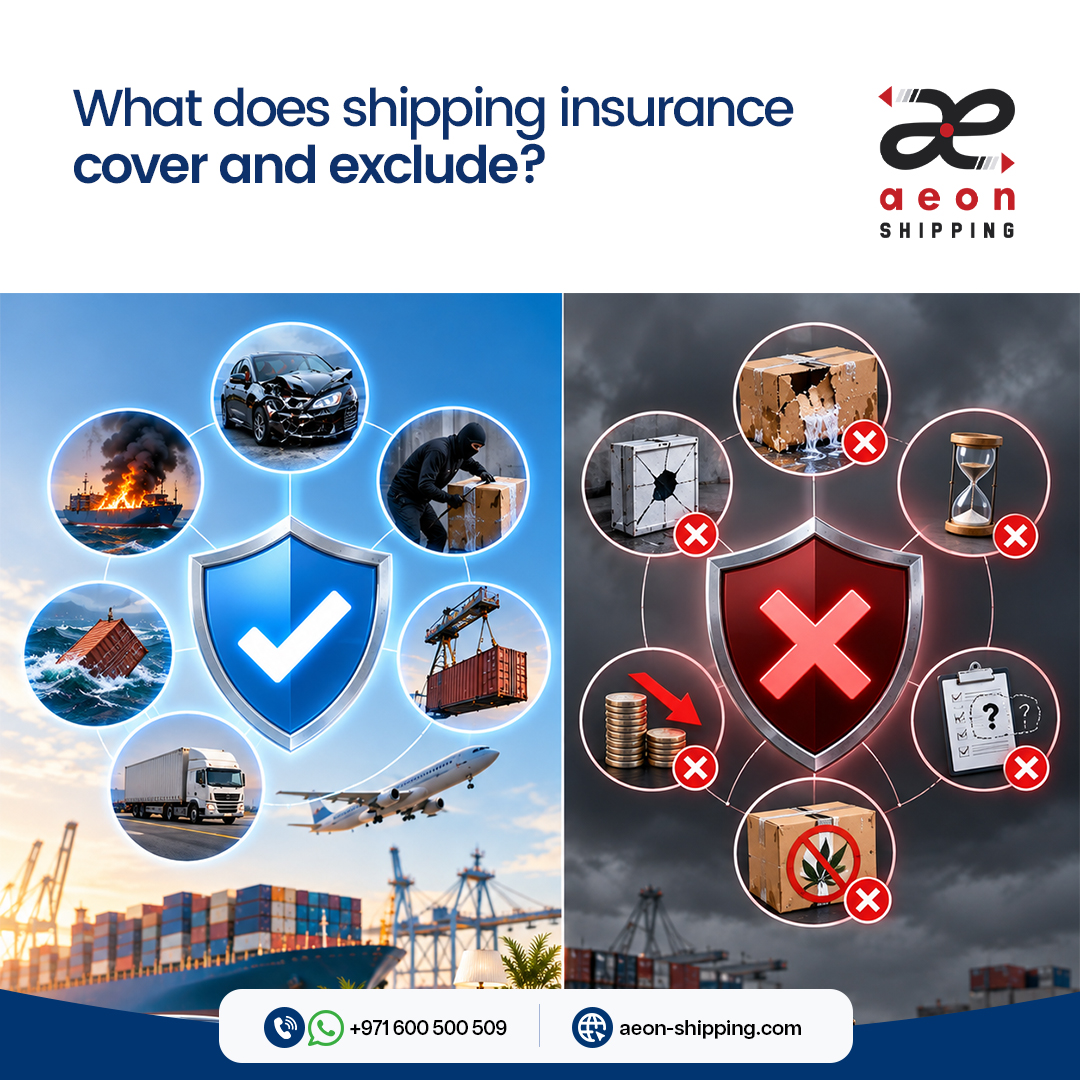
Limits matter just as much. A plan may reject damage caused by weak packing, normal wear or leaking goods. It may not cover an item that was already broken. Illegal goods and items missing from the cargo list will not normally receive cover.
Delay is another point to check. Some policies mention it, while many only cover direct physical loss or damage. Do not assume that a late ship will lead to payment.
Read the list of limits before buying cover. Ask about fragile items, electronics, art and goods placed in storage. A plan called full cover can still contain limits. Written answers are safer than relying on a short phone explanation.
Auto Shipping Insurance for cars sent overseas
Auto Shipping Insurance protects a vehicle on a global trip. The chosen plan must include the risks involved. Normal road cover may stop at the export point or exclude overseas transport. It is best to check rather than assume that the same cover continues.
Car shipping insurance should match the transport method. A car may travel inside a container, on a RoRo vessel or by air. A route may use more than one method. Every stage should appear in the plan.
The owner should declare the correct vehicle value. Photos taken before handover can show its condition. A written inspection should record scratches, dents and other old marks.
Loose goods left inside the car may not be covered. Some shipping firms do not allow them at all. Household items usually need their own cargo list and separate cover.
Ask whether the policy covers loading, port handling, sea travel and road delivery. Also check the amount you must pay towards a claim.
Household Goods Shipping Insurance for personal moves
Household Goods Shipping Insurance can cover furniture, clothes and books. It may also protect other belongings during a move overseas. Each plan sets its own limits, so the cargo list must be clear.
People usually need an inventory that names the items and gives their values. Costly pieces may need separate entries, photos or proof of purchase. A mixed group should not have one value. That may give too little detail for a later claim.
Packing can affect the cover offered. Some wider plans only apply when trained staff pack the goods. Self-packed cartons may receive less cover or only qualify for total-loss cover. Ask before sealing any boxes.
Pairs and sets also need attention. One chair from a matching set may suffer damage. The plan may only pay for that chair. Electrical faults, damp and damage inside an unmarked box can also have limits.
Do not place household goods inside a car. Its vehicle plan may not cover them. Keep both shipments clearly listed and insured in the correct way.
Full cover vs total loss insurance
Wider cover is often called all-risk or full-value cover. It can cover the cost of fixing or replacing an item after damage is covered. Despite the name, it does not cover every possible event. Limits and plan rules still apply.
This option may require trained packing and a detailed list of values. High-value belongings can need extra proof or special approval. The higher level of cover may also cost more.
Total-loss cover is narrower. It often applies only when a serious event causes the loss of the whole shipment. A damaged chair or scratched car may not qualify if the shipment still arrives.
The cheaper option is not always the right one. Part of the load may suffer damage. Think about how much money that would cost. Ask the shipping company to explain both choices in writing. The plan name alone does not show the cover provided.
How are insurance costs and shipment value worked out?
The cost of cover often starts with the declared value of the car or goods. Cover often costs more for a high-value shipment. A claim could be larger.
The route and transport method can also affect the price. A long journey with many stops may have other terms from a direct trip. The type of goods, packing method and chosen level of cover also matter.
Some plans include a deductible or excess. This is the part of an accepted claim that you pay. A higher excess may lower the cover price. Yet it can make a small claim less useful.
Do not lower the declared value just to save money. The payment may be limited to that amount. A wrong value can also cause problems during a claim.
Ask for the cover price as a separate line in the quote. Check the currency, value basis and excess before agreeing. This makes two offers easier to compare fairly.
Preparing your car and household goods before shipping
Good records support both the shipment and any later claim. Wash the car and take clear photos from every side. Include the roof, wheels and inside. Note old marks on the handover report and keep a copy.
Remove personal goods from the car unless the shipping company approves them. Turn off the alarm and leave only the allowed fuel level. Report any fault that may affect loading.
For household goods, prepare a full inventory before packing. Give valuable items their own line and record serial numbers where possible. Keep receipts or other proof of value for costly pieces.
Use strong boxes and protective layers. If the plan requires trained packing, arrange it before collection. Take photos of fragile goods before workers close the cartons.
Keep the quote, policy, cargo list, photos and inspection notes together. Check when the cover starts and ends. These records show the state and value of the shipment. They can help if something goes wrong.
What to do if your shipment is lost or damaged
Act quickly when a car or household item arrives with damage. Take photos before cleaning, repairing or throwing away any packing. Record the issue on the delivery paper if possible.
Contact the shipping company and the claim contact named in the plan. Explain what happened and ask for the claim steps. Each plan has a deadline, so do not wait.
The claim may need the policy, shipping papers, cargo list and proof of value. Photos from before and after transport can support the condition report. Repair quotes may be needed for a car, furniture or another damaged item.
Keep the damaged item and its packing until the insurer gives instructions. Early disposal could remove useful proof.
The insurer will review whether the event falls within the policy. Payment is not automatic. Clear records and honest values make the review easier. The final result still depends on the agreed terms.
How to choose suitable shipping insurance
Start with the shipment rather than the plan name. List the car or household goods. Add their real value and every part of the route. Then look for cover that matches those needs.
Ask when the cover begins and where it ends. Check whether it includes collection, port handling, storage and final delivery. If the shipment changes from road to sea or air, confirm every method.
Read the limits and excess. Find out whether trained packing is required. Ask how high-value goods, self-packed boxes and items inside a vehicle are treated.
The claim process should also be clear. Request the contact details, deadline and list of proof needed. A shipping company should answer these questions without hiding them inside difficult terms.
Compare the full cover and service, not only the cover price. A cheaper plan may leave out the risk that matters most. Keep the final answers in writing before the shipment begins.
Companies that offer good insurance packages in Dubai
Many Dubai shipping companies publish insurance or transit cover options. The best choice will change with the shipment. People should compare the written terms before choosing.
- Aeon Shipping: Aeon publishes vehicle cover options for global routes. The team can discuss cover based on the car value and route. It will also check the shipping method.
- Allied Moving Services UAE: Allied offers a transit protection plan for household moves. Ask how it values the move as one full load or by item.
- Mega Speed Cargo: This Dubai company advertises many levels of cargo cover. Its published services include an all-risk choice. The team also provides help with the claim process.
- Car Shipping Dubai: CSD publishes cover packages alongside its vehicle shipping services. People can compare the offered car cover with an outside policy if needed.
These plans are not identical. Ask who provides the cover. Check the journey, limits, value rules and excess. A company name alone is not enough. The plan must suit the car or household move.
Conclusion
International Shipping Insurance can reduce the risk of financial loss. It can cover a car or household goods sent overseas. The right cover depends on the shipment value, packing, route and transport method.
Read the limits and declare every item honestly. Keep photos, cargo lists and proof of value before the journey begins. If damage occurs, report it quickly and follow the claim steps.
Compare written policies instead of relying on a short promise. A good plan should show what it protects and leaves out. It should also explain how a claim works. This makes it easier to choose a cover that fits the shipment and budget.

