
Planning to move your car from Saudi Arabia to Dubai? Every year, thousands make this exact move. Some are Saudis. Others are expats. Their reasons? Work, family, business. At first glance, the whole thing looks complicated. The truth is, it’s not. This guide breaks down everything you need to know. We’ll talk about shipping methods, paperwork, costs, and about customs clearance. Just practical steps to get your car from point A to point B.
Why People Ship Cars from Saudi Arabia to Dubai
People have different reasons for shipping their cars. Career opportunities in Dubai pull many across the border. The city’s economy keeps growing, and professionals follow. Then there are business owners. They operate in both countries. Having a car in each location just makes sense. No rental hassles. No borrowing from friends.
Car dealers make up a big chunk, too. The UAE market is different from Saudi Arabia’s. Prices vary. Demand shifts. Moving inventory between Riyadh, Jeddah, Dammam, and Dubai? That’s standard practice in the trade.
Expats finishing their Saudi contracts often ship their cars. Why take a loss selling a good car? Move it to your next stop instead.
Now, let’s be clear. Shipping isn’t for quick trips to Dubai. Weekend getaway? Just drive across with your Saudi plates. GCC citizens can do this easily. Shipping makes sense when you want the car registered in Dubai. Or when you need it long-term.
Understanding Your Shipping Options
You’ve got three choices here. Each works differently. Pick based on your budget and how much you want to handle yourself.
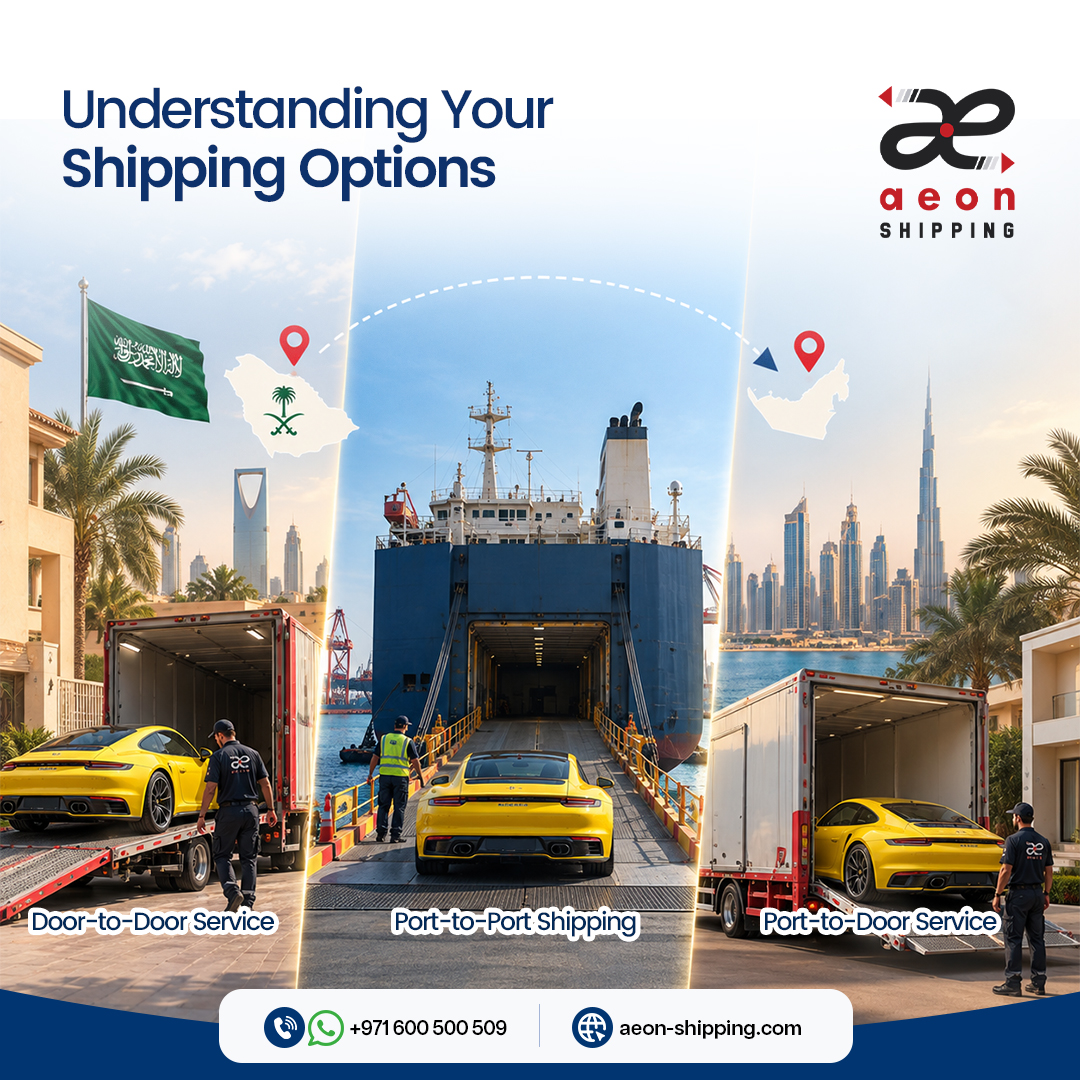
Door-to-Door Service
This is the easiest route. Someone picks up your car from wherever you are in Saudi. It could be your house in Riyadh. Maybe your office in Dammam. Doesn’t matter.They handle everything. Then they deliver straight to your Dubai address. Simple.
Why do people pick this? Convenience. You don’t drive anywhere. No port visits. No coordinating pickups. Everything’s sorted for you. Yes, you’ll pay more. But busy people and first-timers often think it’s worth it.
Port-to-Port Shipping
Want to save money? This is your option. Drive to a Saudi port yourself. Dammam and Jeddah are the main ones. Hand over your car. Then pick it up from Jebel Ali in the UAE.
The savings can be significant. However, factor in your time. Getting to ports and waiting around. Someone needs to collect the car on the Dubai end, too. Ports don’t offer storage forever.
Port-to-Door Service
Think of this as the middle option. You drop the car at a Saudi port. But the company delivers it to your Dubai address. Who picks this? People already living near Dammam or Jeddah. You skip the pickup fees. Still get the delivery convenience on the other side.
Once you’ve sorted your service level, next up is choosing how your car actually travels.
The Actual Shipping Methods
Three main transport methods exist. Land, sea, and air. Each has its place.
Land Freight
Car carrier trucks handle this. They’re those massive multi-level trucks you see on highways. Your car gets loaded up with others heading to Dubai.
The journey? Usually, 2-3 days from major Saudi cities. The roads between Saudi and UAE are excellent. This makes land freight reliable.
Most people go this route. It’s the cheapest for regular cars. Expect to pay SAR 3,000 to SAR 5,625. That’s about $800 to $1,500—sedans, SUVs, standard vehicles—land freight works.
Sea Freight
Two types here. RoRo and containers.
RoRo (Roll-on/Roll-off) Shipping
Picture a floating car park. That’s basically RoRo. Your car drives onto the ship. Gets parked and strapped down. Then rolls off at the destination.
Ships leave from Dammam or Jeddah. They dock at Jebel Ali. The whole sea journey takes 5-7 days. Add port processing, and you’re looking at 10-14 days total.
Cost? Around SAR 2,250 to SAR 4,500. That’s $600 to $1,200. Cheaper than land sometimes. Your car sits outside during the trip. Salt air exposure happens. Modern cars handle this fine, though.
Container Shipping
Your car goes inside a metal shipping container. Maximum protection from everything—weather, salt and other elements.
Two container sizes work. A 20-foot container fits one car. A 40-foot fits multiple vehicles. Some people ship household items along with their car. Moving your whole life? This could work.
Luxury cars? Classic vehicles? Containers make sense. You’re paying for security. Costs run from SAR 5,625 to SAR 9,375. That’s $1,500 to $2,500. Transit time matches RoRo.
Air Freight
Fastest option by miles. Also, the priciest. Your car flies to Dubai. Arrival happens within 24-48 hours. Who uses air freight? People with urgent business needs. Extremely valuable vehicles where time matters. Tight registration deadlines.
But here’s the thing. It costs SAR 18,750 to SAR 37,500. Sometimes more. That’s $5,000 to $10,000. Less than 1% of people shipping between Saudi Arabia and the UAE use air. The cost just doesn’t make sense for most situations.
UAE Car Requirements and Getting Your Car Ready
Dubai has standards. Your car needs to meet them. Otherwise, you’re facing rejections and delays.
UAE Vehicle Standards
Age matters in the UAE. They accept cars up to five years old without much fuss. Older than that? Expect extra scrutiny. Some older cars get rejected outright.
Emissions compliance is mandatory. Most modern Saudi cars already meet the standards. But older vehicles might need testing.
Then there’s the money part. Import duties run about 5% of your car’s value. Plus 5% VAT on top. Luxury cars and big engines? Those might face higher rates.
Cleanliness Requirements
This isn’t optional. Your car must be spotless and has to be cleaned properly.
UAE customs inspect every incoming vehicle. They’re looking for soil, plant material, seeds, and biological stuff. Quarantine regulations are strict. Why? Pests and diseases.
Dirty car shows up? They’ll reject it. Then you pay for professional cleaning. It’s not cheap.
So wash everything. Exterior, wheel wells, undercarriage—all of it. Inside? Vacuum thoroughly. Under seats, boots, door pockets, everywhere.
Remove every personal item: phone chargers, sunglasses, documents, prayer mats, and tools. Everything comes out. Shipping insurance doesn’t cover personal stuff anyway. Plus, customs officials search vehicles. Personal items raise questions.
Take photos of existing damage. Multiple angles. Every scratch, dent, mark. These pictures protect you if something happens during shipping. Check your fuel level. Quarter tank or less is the rule—safety regulation for transport vessels. But keep enough fuel for driving during loading and unloading.
Saudi Arabia Release Requirements
Before your car leaves Saudi soil, you’ve got requirements to meet. Traffic fines kill exports. Any unpaid violations? Your car doesn’t leave. Parking tickets, Saher camera fines, speeding tickets—clear them all.
Check through Absher. The platform shows all your violations. Pay everything before starting the export process. Even small amounts will stop you. Financed your car? You need a bank clearance letter. The car must be fully paid off. Saudi customs won’t process exports for vehicles with active loans.
Your Istimara needs to be current. Check the expiration date. Expired registration? Renew it first. The name on the Istimara must match your ID exactly.
The Documentation Needed to Ship a Car to Dubai
To ship a car to Dubai from Saudi Arabia, there is a lot of paperwork. Nobody likes it. But you can’t skip it.
Saudi Export Papers
Your car needs proper export documents before leaving. The list includes your original Istimara, national ID or Iqama for expats, customs export declaration, proof of ownership, and a valid insurance certificate.Saudi customs are strict about documentation. One missing paper delays everything by days. Maybe longer.
Many shipping companies offer documentation help. If paperwork stresses you out, consider paying for this. The headache you avoid is worth the cost.
UAE Import Requirements
Dubai customs wants its own paperwork. You’ll need an original purchase invoice or evaluation certificate. Export certificate from Saudi Arabia. Valid registration documents. Chassis and engine number verification. Emission compliance certificate.
Here’s what trips people up. Documents need proper attestation. Original documents work best. Certified copies sometimes work. Depends on the customs officer you get.
The Shipping Process Timeline
Got your paperwork ready? Car’s prepared? Time to ship.
Your car gets loaded onto whatever transport method you choose. Land carrier, RoRo ship, container—depends on what you booked. Professional companies use proper equipment—straps, wheel chocks, and securing systems. Your car won’t move during transit.
How long does everything take? Land freight runs about 5-7 days total. Sea freight—both RoRo and containers—takes 10-14 days, including port processing. Air freight? You’re looking at 24-48 hours for urgent shipments.
Customs Clearance in Dubai
First-timers often get nervous here. Don’t be. It’s manageable.
Your car arrives at a port or border crossing in the UAE. Customs officials inspect it. They check if it matches the paperwork. Verify compliance with UAE standards. Calculate applicable duties and fees.
Duties depend on your car’s value, age, and type. Usually around 5% customs duty. Plus 5% VAT. Luxury vehicles or modified cars might face higher rates. Your shipping company should estimate these costs upfront.
Clearance typically takes 2-4 days. In a rush? Expedited services exist. They cost extra, naturally. Once cleared, you can register with the RTA in Dubai.
What It’ll Cost You
Money matters. Here’s what affects your final bill.
Service level makes a difference. Door-to-door costs more than port-to-port. Your vehicle’s size and weight matter. The distance between the pickup and delivery points affects the price. Peak seasons see higher rates. And of course, which freight method you pick.
Rough numbers? A standard saloon from Riyadh to Dubai runs $800-1,500. That’s SAR 3,000-5,625 for basic land or sea freight. Container shipping? $1,500-2,500 (SAR 5,625-9,375). Air freight starts at $5,000 (SAR 18,750).
But think about what you’re buying—peace of mind. Professional handling. Someone else is dealing with logistics and paperwork. That’s worth something.
Choosing the Right Shipping Partner
Companies aren’t all equal. Some specialise in commercial shipments. Others focus on personal moves. Ask about their Saudi-UAE route experience. How’s their insurance coverage? Can you reach customer service when issues pop up? Watch for hidden fees. Some companies quote low and then add charges later. What transport methods do they actually offer? Do they help with customs clearance?
Check reviews. Facebook groups and expat forums have honest feedback. Reddit too. A company’s reputation matters when you’re handing over your car.
AEON Shipping handles Saudi-UAE vehicle transport. They’ve been doing it for years. Their services include door-to-door delivery, documentation help, and customs clearance support. They know GCC routes well. Understand both Saudi export and UAE import procedures. They offer multiple options: land freight, RoRo, containers, and air freight. Pick based on your budget and timeline.
Their customer service team can walk you through everything. Other reputable companies also operate this route. Get quotes from several. But don’t just pick the cheapest. Corners get cut somewhere when prices are too low.
Timeline Planning
Rushing costs more. Adds stress, too. Start planning 3-4 weeks before you need your car in Dubai. This gives you time for gathering documents and comparing quotes. Preparing your vehicle properly and clearing any Saudi fines.
Holiday seasons get busy. Summer months, too. Eid holidays can add days to normal transit times. Summer vacation periods slow things down. Book earlier during these times.
Insurance Matters
Your regular car insurance won’t cover international shipping. You need marine cargo insurance.
Most reputable companies include basic coverage in their quotes. Read the fine print, though. Basic coverage might not fully protect expensive vehicles. Custom modifications? Probably not covered. Expensive car? Get supplemental insurance. The extra cost is small compared to potential losses.
After Arrival
Getting your car to Dubai isn’t the end. You’ve still got steps left.
RTA registration comes first. Then, the UAE licence plates. Local insurance. Vehicle inspection if required. Some shipping companies offer these as add-ons. Bundling saves time. You’ll pay for convenience, though.
Common Mistakes to Avoid
First-timers make the same mistakes repeatedly. Learn from them.
Don’t underestimate documentation requirements. One missing paper stops everything. Don’t leave personal items in the car. Customs will find them. Guaranteed. Don’t skip the pre-shipment photos. Don’t pick a company based solely on price. Cheap usually means problems somewhere.
Don’t forget traffic fines. They’ll block your export. Don’t assume your old car will be accepted. Check the UAE age restrictions first. Don’t wait until the last minute, especially during busy seasons.
Wrapping It Up
Shipping your car from Saudi Arabia to Dubai isn’t as complicated as some people make it out to be. Pick your service level. Choose the right freight method. Get your paperwork organised early—clear all Saudi requirements. Prepare your vehicle properly.
Working with experienced professionals helps. Companies like AEON Shipping know this route inside out. They understand Saudi export procedures. They know the UAE import requirements. That knowledge saves you time and headaches.
Relocating from Jeddah for work? Maintaining business between Dammam and Dubai? Trading vehicles? The process stays the same. Take it step by step. Don’t rush. Your car will get there.
The investment in proper shipping pays off—fewer headaches. Protected assets. Your own vehicle will be waiting when you arrive. That’s valuable.

