
Shipping cars to Saudi Arabia from Dubai—confusing, right? Maybe you got a new job in Riyadh. Or the family’s moving to Jeddah. Whatever it is, you’re now stuck figuring out what to do with your car.
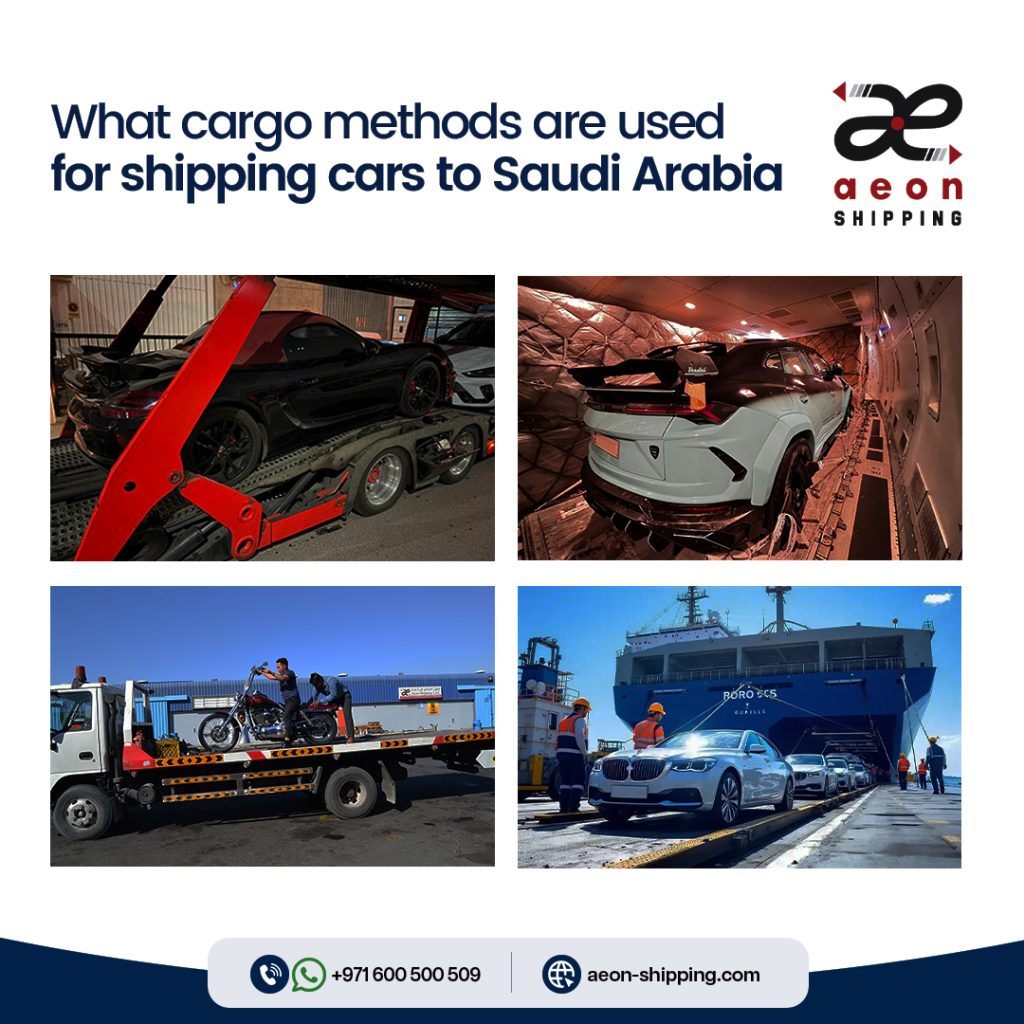
Thing is, you’ve got four different ways to pull this off. Not one. Four. And they’re all pretty different from each other—different costs, different speeds, different trade-offs. Some get your car there in two days. Others take a couple of weeks but won’t break the bank. We’re going to walk through all of them—land transport, containers, RoRo (yeah, we’ll explain what that means), and even air freight for when you’re really in a rush.
The Land Transport Option: Fast and Straightforward
Land transport’s probably what popped into your head first, right? Saudi Arabia’s literally next door to the UAE. Why overcomplicate things?
Recovery Trucks: The Premium Choice
Think of recovery trucks as the first-class option. These specialised vehicles? They’re carrying one car. Just yours. Nobody else’s.
You’ve got two types here. Open recovery trucks are basic flatbeds—your car sits out in the open air. Cheaper, faster, gets the job done. Then there are closed recovery trucks. Picture your vehicle tucked inside a protective trailer, safe from sandstorms and that brutal Gulf sun.
Speed’s the real selling point here. We’re talking 2-3 days max delivery time to most Saudi cities. Got a job starting Monday in Riyadh, and it’s Friday? This could work. Of course, there’s the Al-Batha border crossing to deal with, but even with that, it’s still your fastest bet.
Car Carrier Trailers: Budget-Friendly Bulk Transport
You’ve seen these on the highways. Massive two-storey trucks hauling 7-8 cars at once. That’s your car carrier trailer.
The catch? Your car’s sharing a ride. And that means you’re waiting till they fill up the whole carrier. It could be tomorrow. It could be next week. Nobody’s in a rush here. But hey, you’ll save a decent chunk of money compared to getting your own recovery truck.
Dealers love these things. People moving multiple cars use them. If you’re just one person with one car and you’re counting dirhams? Still worth considering. Just don’t book this if your timeline’s tight.
Container Shipping: Security Meets Flexibility
Shipping by sea sounds dumb when you could just drive across the border, right? Like, why bother?
Well, containers have some perks land transport doesn’t. Real perks.
How Container Shipping Actually Works
Your car gets stuffed into a shipping container at Jebel Ali Port. Standard stuff. You’ve got two sizes. The 20-foot one holds maybe 1-2 cars. The 40-foot? Fits 3-4 vehicles. From there, it’s off to Jeddah Port or Dammam Port.
Pretty straightforward process. But here’s the clever bit—you’ve got leftover space in that container. Moving house at the same time? Chuck your boxes in there. Furniture? Sure. That old bicycle your kid’s outgrown? Why not? Land transport won’t let you do any of that.
Dedicated vs. Shared Containers
A dedicated container means it’s all yours. Every cubic metre. Pack it however you fancy. Load up extra cargo. Your car won’t get disturbed till it hits Saudi customs.
Downside? You’re paying for the whole thing whether you fill it or not.
Shared containers split costs between shippers. Maybe your Toyota shares space with someone else’s Honda. Cheaper option—we’re talking potentially 40-50% savings. But you lose flexibility and there’s less room for your stuff.
Most folks pay somewhere between 4,300 to 5,700 AED for container shipping from Dubai to Saudi Arabia. That includes customs clearance and all that border paperwork. Not cheap, but not outrageous either.
The Security Advantage
Here’s why people love containers for expensive cars. Your vehicle’s locked in a steel box. Salt air? Can’t reach it. Sand? Nope. Moisture? No chance.
Got a classic car? Something with sentimental value? That peace of mind’s worth the extra cost. Your car sits untouched from the moment they seal that container till Saudi customs opens it up again.
RoRo Shipping: The Maritime Middle Ground
Roll-on/Roll-off. Basically, it’s a floating car park. And honestly, it’s getting more popular every year.
What Makes RoRo Different
Picture this. You drive your car straight onto this massive ship. Park it. Walk off. Done.
When it reaches Dammam or Jeddah? Someone drives it off the other end. No containers. No cranes. No complicated lifting equipment. Just drive on, drive off.
These ships are built specifically for vehicles. They’ve got ramps, multiple decks, the whole setup. Your car’s protected from wind and water damage. And the port paperwork’s way simpler than dealing with containers.
Cost-wise? RoRo typically runs about 20% cheaper than container shipping. That’s real money you’re saving.
But your car needs to be running. Can’t drive a broken-down car onto a ship, can you? So if your vehicle has got any mechanical issues, this option won’t work.
The RoRo Process
Your car’s gotta be empty. Can’t leave personal stuff inside. They’re strict about this. Some people find that annoying, especially if they’re relocating and have loads to move. Fair enough.
But the actual process? Dead simple. Less steps than containers means less waiting around. No stuffing cargo, no unstuffing it later. Just roll it on, sail, roll it off.
One thing though. These ships don’t leave daily. Maybe weekly, maybe less. So you’ll need to plan around their schedule rather than yours. Not ideal if you’re in a rush, but for most people, it works fine.
Air Freight: When Time Trumps Everything
Let’s not beat around the bush. Air freight’s expensive. Like, really expensive. But sometimes that doesn’t matter.
The Speed Factor
Air freight gets your car there in 3-10 days. Compare that to weeks for sea transport, or even 2-3 days for land (which can stretch with border delays).
Emergency relocation to Riyadh? Urgent business situation? This is your only real option.
Dubai International, Abu Dhabi International, Sharjah International—these airports handle car shipping. They connect to pretty much every major Saudi airport.
When Air Freight Makes Sense
Exotic cars, mostly. High-value vehicles. Genuinely urgent business needs.
The cost? Anywhere from 5 to 10 times more than sea freight. We’re potentially talking about AED 15,000 to 20,000 depending on your car’s size. Maybe even more.
Your car’s dimensions matter here. Length times width times height (measured in centimetres), plus weight. Normal sedan’s cheaper than an SUV. Luxury vehicle? That’ll cost you even more.
The funny thing is, air freight usage has grown about 15% in the past three years. People are willing to pay premium prices for guaranteed speed.
Comparing Your Options: What Actually Matters
So which one should you pick? Depends what you care about most, honestly.
Cost Comparison
Car carrier trailers are usually cheapest—around AED 3,000-4,000. Recovery trucks cost more at AED 4,500-6,000, but they’re faster and dedicated.
Sea freight through shared containers sits at 4,300-5,700 AED. Dedicated containers push past AED 8,000. RoRo’s typically 20-30% cheaper than containers. Air freight? Could easily hit AED 15,000-20,000 or higher.
Time Investment
Need it there fast? Land transport’s your friend. Recovery trucks hit most Saudi cities in 2-3 days. Dubai to Riyadh takes two days when things go smoothly.
Containers and RoRo need patience—you’re waiting 1-2 weeks minimum. Sometimes longer. Air freight’s faster than sea, but might not beat land if the border crossing’s quick.
Security and Protection
Containers win on protection. Steel box, sealed tight.
RoRo’s pretty good for weather protection, just not as bulletproof. Recovery trucks (especially closed ones) give decent security.
For luxury or vintage cars, extra protection is probably worth it. Standard family car? Most people don’t stress.
Special Considerations for Saudi Import Regulations
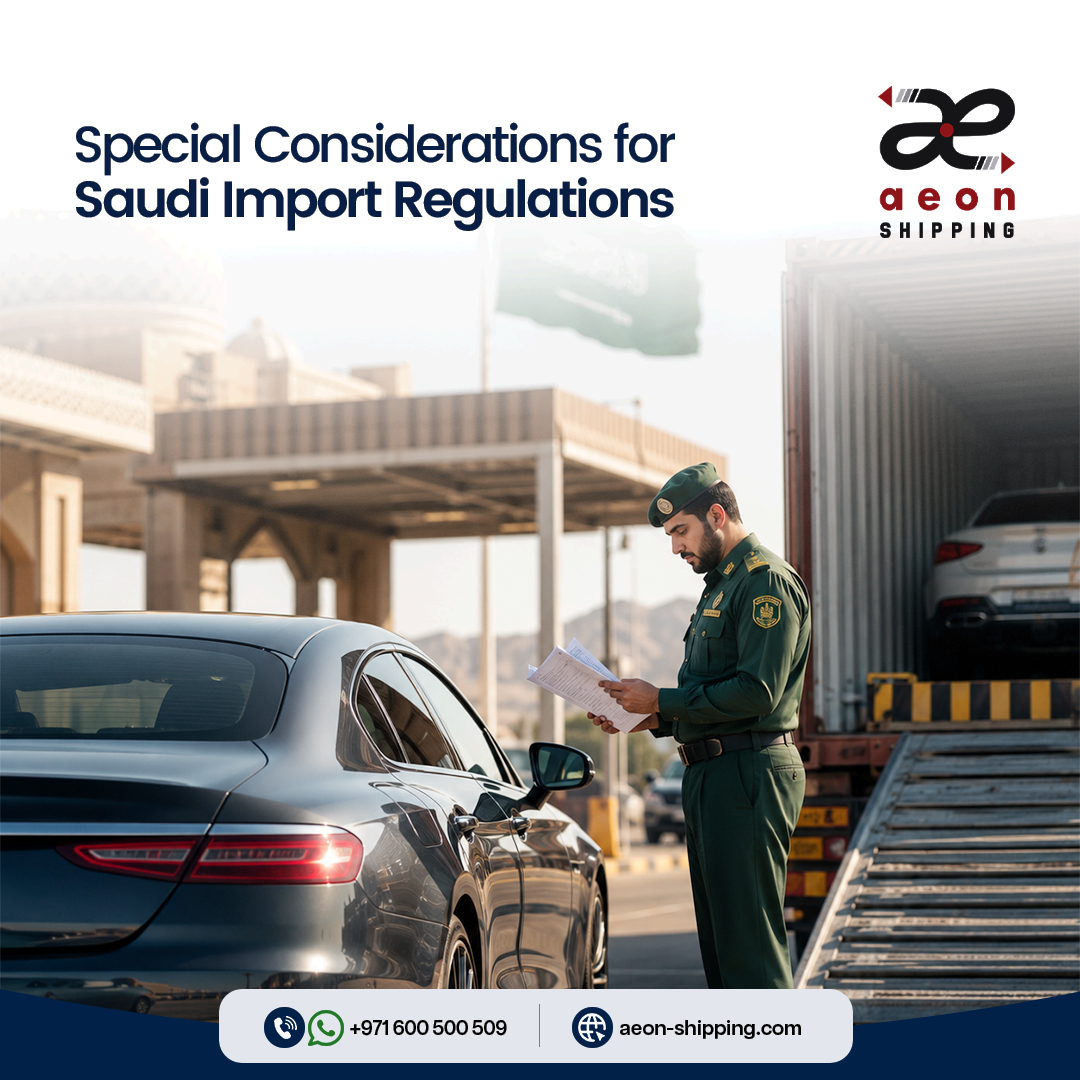
Before you get too excited about any of this, there’re rules you need to know. Saudi customs don’t mess around.
Your car can’t be more than five years old. They calculate this weird descending order, excluding the current year. So in 2026, you can import cars from 2021 onwards. Makes sense once you think about it.
Classic cars get a free pass though. Thirty years or older? You’re good. Vintage car collectors can breathe easy.
Left-hand drive only. Right-hand drive’s banned. No exceptions. Your car also needs to be accident-free and can’t have been used as a taxi or police vehicle. They’re picky about this stuff.
Then there’s the money bit. Import duties hit you for 5% of your car’s value. Plus another 15% VAT on top. So if your car’s worth AED 50,000, that’s AED 2,500 in duty and another AED 7,500 in VAT. Not exactly pocket change, is it?
Documentation’s crucial. Original vehicle title. RTA export certificate from the UAE. Copy of your passport. Proof you’ve owned it for at least six months (they prefer this). Get your paperwork wrong and you’ll be stuck waiting at Al-Batha border or sitting in port customs for ages.
Making Your Choice: Practical Decision-Making
Think about what you actually need, not what sounds coolest.
Moving to Riyadh for work with a tight start date? Land transport via a recovery truck makes sense. Budget tight and you’ve got time to spare? A shared container or RoRo won’t hurt your wallet as much.
Shipping multiple cars? Car carrier trailers or those consolidated containers can knock off 30-40% of your costs. That adds up fast when you’re moving two or three vehicles.
Got something valuable that deserves kid-glove treatment? Container shipping’s worth the extra dirhams. You’ll feel better knowing your prized car arrived without a scratch.
Where you’re going matters too. Jeddah? Sea freight’s logical since it’s a major port city. Same with Dammam on the eastern coast. Riyadh sits inland though—land routes might actually be quicker depending on how fast you need it there.
Working with Shipping Companies
Don’t try doing this solo. Seriously.
Professional shipping companies handle all the headache stuff—customs clearance, documentation, border procedures, delivery coordination. They know which method works for your specific route and car type because they’ve done it a thousand times before.
AEON Shipping, for example, offers all four shipping methods we’ve talked about. They’ve been doing this for 15 years, shipped to over 130 countries. Transparent pricing, no sneaky hidden fees. Their door-to-door service picks up your car anywhere in Dubai and delivers it wherever you need it in Saudi Arabia.
That said, don’t just pick the first company you find. Get multiple quotes—prices jump around between providers. And check reviews, yeah? A company that’s been shipping cars to Saudi Arabia for a decade knows all the tricks. They’ve seen every problem that can happen and know how to fix it.
Experience matters more than you’d think in this game.
Wrapping It Up
Shipping cars to Saudi Arabia from Dubai gives you way more options than most people realise. Land’s fast. Containers are secure. RoRo balances both. Air freight’s there when you’re desperate.
Pick what fits your budget and timeline. Don’t forget those import rules—five years max, left-hand drive, paperwork sorted. Get it right, and your car’ll be waiting for you in Riyadh, Jeddah, or Dammam, ready to go.

