
Moving your stuff halfway across the world? It’s really stressful. Insurance options aren’t just paperwork. They’re your safety net. Your peace of mind. Your financial backup plan when things go sideways.
Relocating from Dubai to anywhere else on the planet comes with risks—big ones. Understanding coverage can save you severe headaches. And honestly, a lot of money, too. This guide breaks down everything. The details that actually matter. The stuff nobody tells you until it’s too late.
Why You Actually Need Insurance (No, Really)
Your moving company seems reliable. Professional. Great reviews, maybe. But stuff happens. Ships hit rough seas. Containers get smashed during loading. Theft is real. Natural disasters don’t care about your shipping schedule.
Industry data? Roughly 1.5% of packages get lost or stolen during transit. That’s domestic shipping. International moves? Multiply those risks by a lot.
Here’s what most people miss. Freight forwarders have limited liability. Really limited. Compensation based on weight. Maybe $0.60 per pound. Not on the actual value.
That AED 15,000 designer sofa gets damaged? You might see a few hundred dirhams. Maybe. That’s where proper coverage comes in.
The Main Types of Coverage You’ll Encounter
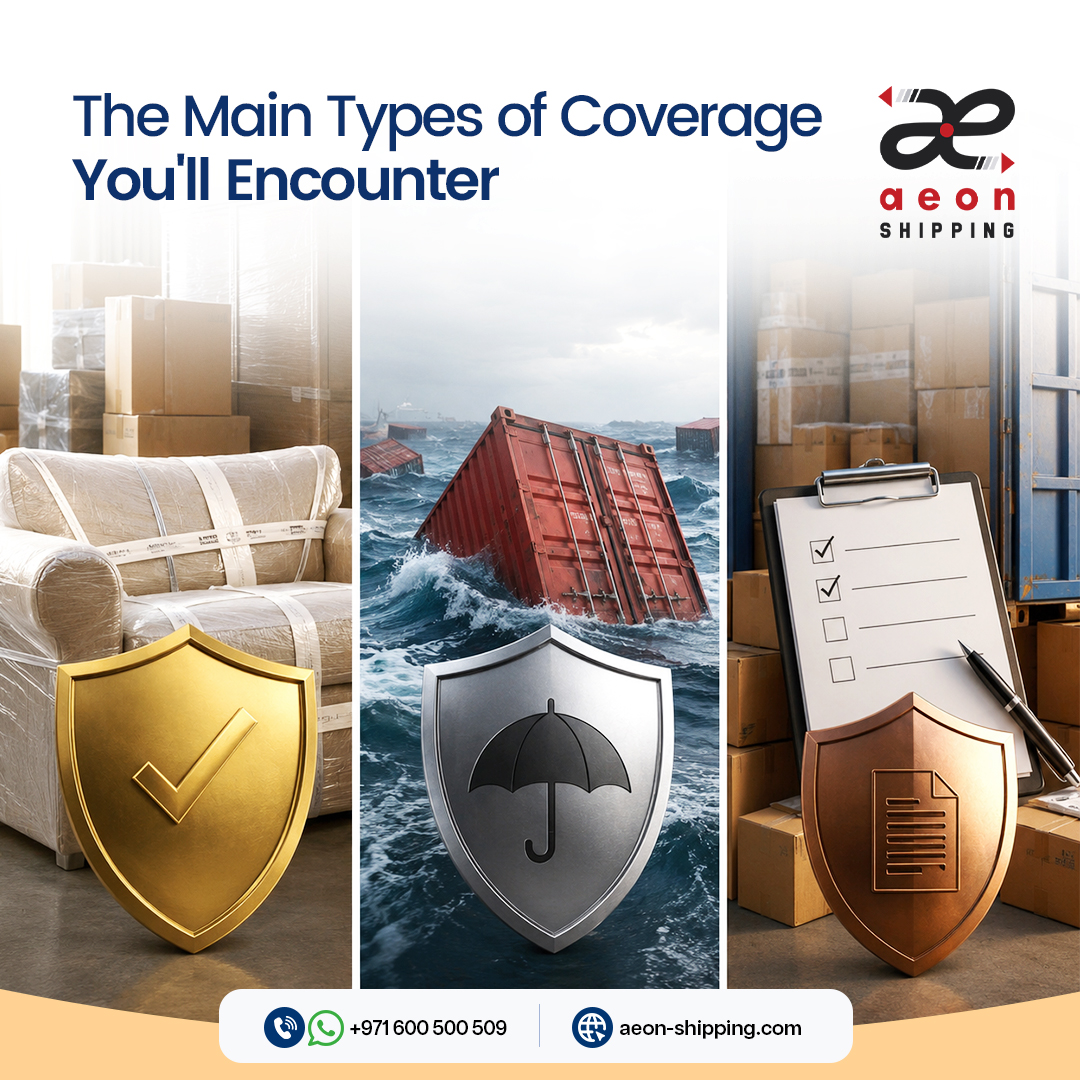
All-Risk Coverage (The Gold Standard)
This is the comprehensive option. The one that lets you sleep at night.
All-risk policies cover almost everything. Except what’s specifically excluded in the fine print. Fire? Covered. Theft? Yep. Water damage from that freak storm? Got it. Breakage during handling? That too.
But here’s the catch. There’s always a catch.
You need professional packing. Can’t just throw your stuff in boxes and expect all-risk coverage. Insurance companies don’t play around with this. Your moving company handles the packing. Or you’re looking at different coverage.
Cost? You’ll pay 1% to 3% of your shipment’s value. Say you’ve got AED 100,000 in stuff. Insurance runs you AED 1,000 to AED 3,000. Sounds steep? Consider what you’d lose if something went wrong.
Total Loss Insurance (The Budget Option)
Pretty straightforward, this one.
Your entire shipment gets destroyed? Completely lost? You’re covered. Individual box goes missing? Scratched furniture? Broken electronics?
You’re on your own.
Total loss coverage means it only pays when disaster really hits—big disasters. The ship sinks. The container disappears completely. Fire destroys everything—those kinds of scenarios.The upside? Cheaper. Sometimes, it’s way cheaper than all-risk coverage. The downside? You’re basically betting nothing will go wrong. Or if something does, it’ll be spectacularly wrong.
Not exactly comforting when you’re shipping your entire life overseas.
Self-pack your stuff? This is what you get. Insurance companies won’t offer all-risk coverage for self-packed goods. They can’t verify packing quality.
Named Perils Coverage (The Middle Ground)
Sometimes called specific perils insurance. Covers only the risks explicitly listed in your policy.
Fire, collision, theft, and natural disasters. Whatever’s written down.
More flexible than total loss. Less comprehensive than all-risk. And you need to read that policy. Really carefully. Damage comes from something not on the list? You’re not getting paid.
What Actually Gets Covered (And What Doesn’t)
Let’s talk specifics. Devil’s in the details, right?
Typically covered:
- Physical loss or damage during transit
- Fire and explosion
- Theft and pilferage
- Natural disasters (earthquakes, floods, storms)
- Accidents during loading/unloading
- Water damage from external sources
- Non-delivery of goods
Usually NOT covered:
- Pre-existing damage (that scratch was already there)
- Improper packing
- Inherent vice (wood warps in humidity, for example)
- Normal wear and tear
- Customs seizures
- War and nuclear incidents
- Pest damage (insects, rodents)
- Mold from improper storage
See why documentation matters?
Take photos. Of everything. Before packing. Detailed photos. Multiple angles. Trust me.
The Professional Packing Requirement Nobody Tells You About
The packing catches people off guard. Most comprehensive insurance requires professional packing. Not your cousin who’s “really good at organizing.” Not you at 3 AM wrapping plates with the newspaper. It should be done by professional certified movers. Why? Packing quality directly impacts claims. Your 55-inch TV arrives cracked? You packed it yourself? The insurance company points to inadequate packing. Claim denied—end of story.
Professional packers use proper materials. They know how to secure fragile items. They create inventories. Document everything. And crucially? They provide proof of professional packing. That validates your all-risk coverage.
Should you pack yourself to save money? Fine. Understand what you’re giving up. Limited to total loss coverage. And you’ll need extremely detailed documentation of what you packed and how you packed it.
How Much Does This Actually Cost?
Numbers. Let’s talk numbers.
Insurance premiums? Typically, 0.6% to 4% of your shipment’s declared value. The percentage varies based on several factors:
- Destination country: Australia versus London? Different risk profiles.
- Route: Some shipping lanes are riskier.
- Value: Higher-value shipments might get better percentage rates.
- Type of goods: Electronics and antiques cost more to insure than basic furniture.
- Shipping method: Air freight versus sea freight affects pricing.
Real-world Dubai example. Household goods worth AED 80,000 to the UK via sea freight? Between AED 480 and AED 3,200 for insurance. Wide range, yeah. Which is why you need multiple quotes.
Think about replacing everything if things go wrong. AED 80,000 of furniture, electronics, clothes, and kitchen stuff. All of it. You’d rather pay a few thousand for insurance. Or potentially lose everything?
Do the math.
Dubai-Specific Considerations
Living in Dubai means unique factors.The heat. Extreme temperatures can damage items during storage before shipping. Make sure your policy covers storage in transit.
Jebel Ali Port is one of the busiest in the world. Great for shipping options. But volume can sometimes get chaotic.
Moving within the GCC? Check whether you need a residence visa for customs clearance. Different rules apply.Many Dubai residents are expats with items from multiple countries. Make sure your policy covers mixed-origin goods.
Choosing the Right Coverage for Your Move
Stop. Think about what you’re actually shipping.
Family heirlooms? Expensive electronics? Designer furniture?
You need all-risk coverage. Period. No debate. Replacement cost far exceeds the insurance premium.
Basic IKEA furniture and everyday items? Total loss coverage makes sense if you’re watching every dirham. But calculate replacement cost first. Sometimes that “cheap” option isn’t actually cheaper when you factor in risk.
Decision framework:
- High-value or irreplaceable items: All-risk, professional packing, detailed documentation
- Mixed value shipment: All-risk for main shipment, possibly separate coverage for vehicles
- Low-value, easily replaceable items: Total loss might work, but think carefully
- Antiques, art, collectibles: Specialized coverage, professional appraisals, extra documentation
And please. Read the exclusions. Actually read them. Don’t just scroll past. That section about “pairs and sets” might matter when your dining chairs arrive damaged.
The Claims Process (When Things Go Wrong)
Nobody wants to file a claim. But if you need to? Here’s what to expect.Most reputable insurers aim to resolve claims within 30 days. Some companies process around 25,000 claims yearly with 90% customer satisfaction. That’s the benchmark you’re looking for.
Essential steps:
- Document damage immediately upon delivery
- Don’t sign a clean receipt if there’s visible damage
- Note the damages on the delivery receipt
- Take photos and videos
- File within the timeframe (often 15 days)
- Provide all requested documentation
- Keep copies of everything
Claims settle faster with professional packing—fewer arguments about responsibility.
Getting Multiple Quotes (Do This)
Never accept the first quote.
Different providers assess risk differently. What one prices at AED 2,500, another might quote at AED 1,800 for identical coverage.
Questions to ask:
- What’s the exact coverage scope?
- What’s excluded?
- Is there a deductible?
- What’s the claims timeline?
- Door-to-door or port-to-port?
- What about storage?
Different providers in the UAE offer varying policies. Prices differ wildly. Claims processes? Night and day sometimes.
Do your homework. Compare at least three quotes.
Insurance with AEON Shipping
When you’re shipping from Dubai, working with a company that understands the local landscape makes a difference.
AEON Shipping offers comprehensive insurance solutions for international household goods shipping. Both all-risk and total loss coverage options. Depends on what you need.
Door-to-door coverage is way better than port-to-port. With door-to-door, you’re protected from the moment your stuff leaves your Dubai home until it arrives at your new place—the whole journey.
Professional packing services? Included. That’s what unlocks the all-risk coverage you actually want. The team handles everything. Proper materials. Proper technique. Proper documentation.Claims support is local. You’re not dealing with some call center halfway across the world. The support team speaks your language.
AEON provides customized insurance quotes based on your actual shipment value and destination. No one-size-fits-all approach that leaves you over-insured or dangerously under-covered. The documentation process? Streamlined. They walk you through inventory creation, valuation, and all the paperwork that makes insurance claims work.
Special Items That Need Extra Attention
Some belongings need special consideration.
Vehicles: Cars and motorcycles need specific coverage. Pre-loading condition reports is mandatory. Coverage is typically port-to-port.
Fine Art and Antiques: Professional appraisals required. Higher premiums apply.
Electronics: Requires professional packing. Temperature control considerations apply.
Collections: Need specific valuation and often additional riders to your main policy.
Don’t undervalue items to save on premiums. It’ll backfire during claims.
Door-to-Door vs Port-to-Port Coverage
This distinction matters—more than most realize.
Port-to-port coverage protects your shipment only during the ocean voyage. Once it hits the port? You’re on your own until delivery.That truck ride from Jebel Ali to your accommodation? Not covered. Storage at destination? Not covered. Final delivery? Not covered.
Door-to-door coverage protects from pickup at your Dubai residence to delivery at your destination home. Much better.But verify that “door-to-door” actually means what you think it does. Some policies have gaps. During warehouse storage. Between carriers.
Ask explicitly: “If my shipment sits in a warehouse for three weeks between the ship and final delivery, am I covered?”
Get it in writing.
The Value Declaration Dilemma
You need to declare the value of your shipment. Accurately.
Overvalue? You’re paying inflated premiums for coverage you don’t need. Undervalue? You won’t get adequate compensation for losses.
Either way, you lose.
How to value properly:
- Replacement cost, not sentimental value
- Check current prices for similar items
- Use receipts for recent purchases
- Get appraisals for valuables
- Create detailed inventories with descriptions
- Include photos of high-value items
Here’s something important. Your insurance policy is only as good as your documentation. The insurance company won’t just take your word that the damaged item was worth AED 5,000.
Proof. Always proof.
Wrapping It Up
Choosing the right insurance options for your international household goods shipping from Dubai? Doesn’t need to be complicated. But it does need to be taken seriously.
All-risk coverage for professionally packed goods? That’s your safest bet for valuable shipments. Total loss coverage for self-packed, lower-value items? Possible. But risky. Named perils? If you’re shipping specific items with known risks.
The few thousand dirhams you spend on proper coverage could save you tens of thousands in replacement costs. Do the math. Get multiple quotes. Read the exclusions. Take photos. Pack professionally when possible. Document everything.
Your belongings are making a long journey. Give them the protection they deserve. And give yourself peace of mind.
Because shipping your life overseas is stressful enough, you shouldn’t have to worry whether everything will arrive intact.
Choose your coverage wisely. Your future self will thank you.

