

Shipping household goods to Saudi Arabia from Dubai requires careful planning, clear documentation, and knowledge of Saudi customs rules to ensure a smooth and stress-free relocation.
Honestly, this move happens all the time. Every single week, someone’s packing up their life — a new job offer in Riyadh, a family business taking root in Jeddah, better opportunities calling from Dammam. Geographically, it’s barely any distance at all. The real challenge isn’t the drive across the border — it’s the paperwork waiting on the other side.
Overview of Shipping Household Goods to Saudi Arabia
Saudi Arabia has changed a lot recently. Vision 2030 opened things up, and jobs are everywhere now, with great salaries and new opportunities. Some people go for two years, others move permanently, but either way, you’re shipping your stuff.
The main shipping routes are Jeddah Islamic Port, King Abdul Aziz Port in Dammam, and the land border crossings. Trucks cross daily and containers move constantly, so it’s a fairly normal business by now.
The good news is that customs sees these moves constantly, and moving companies do this route all the time, so the system works well. Thousands of families have already done this move. The relationship between the UAE and Saudi Arabia also makes this easier, since both countries encourage movement and their business ties and cultural connections run deep — which makes logistics smoother than moving to more distant countries.
Customs Regulations for Shipping Household Goods to Saudi Arabia
Saudi Customs Rules You Must Know
Used personal items enter duty-free, which sounds great, but there’s a catch: everything must look genuinely used, not “bought last week” used. Customs officers are quick to spot new furniture still in factory wrap, electronics in original boxes, or items with price tags still attached, and they’ll assume you’re bringing goods in to sell.
The safe zone is owning your items for at least six months before shipping. An old couch is fine; a brand-new bed still in the box is not.
You’ll also need proof of your move — a Saudi Iqama, work permit, or residence visa. Tourist visas don’t work here, since customs wants proof that you actually live there. This documentation shows intent and proves a genuine relocation rather than a commercial import disguised as a personal move.
Prohibited and Restricted Items
This is the part that trips up almost everyone, no matter how prepared they think they are.
Let’s start with religious materials, since it’s a common surprise. A single Bible tucked in with your belongings? Usually fine. A whole box of religious books, though? That tends to get pulled aside. And anything that even looks like missionary material — pamphlets, materials meant for distribution — that disappears on the spot, no questions asked.
Then there’s the flat-out banned list: all alcohol, and yes, that includes cooking wine you might not even think of as “alcohol.” Vanilla extract with an alcohol base. Any pork products. Certain medications, if you don’t have a prescription to back them up.
Some things have moved into restricted territory more recently — drones, surveillance cameras, gaming systems, even smart home devices. Worth checking current rules before you pack any of these.
And a few things you should just never attempt to ship: decorative swords, toy guns, martial arts weapons, anything that even resembles a weapon at a glance. Not worth the risk.
One more thing worth saying plainly — don’t bother trying to hide expensive electronics in with other items. Customs has seen every trick by now, so just declare what you’re bringing. And beyond the rules themselves, it helps to keep the bigger picture in mind: Saudi Arabia follows Islamic law strictly, so plenty of things considered completely normal elsewhere just aren’t there. Go in with that understanding, respect it, and the whole move tends to go a lot more smoothly.
Required Documents for Shipping from Dubai to Saudi Arabia
Personal Documentation
You’ll need a passport copy, your Saudi Iqama (if you already have it), and work papers from your employer.
One big mistake people make is shipping their goods before they’ve actually arrived in Saudi Arabia. Customs will ask why you’re shipping to a country you’re not even in yet, and that creates delays — so it’s best avoided.
Shipping and Inventory Documents
Your inventory list is genuinely important here. Vague entries like “kitchen items,” “miscellaneous boxes,” or “personal stuff” simply don’t work. What works instead is something specific, like “Box 1: six white plates, four bowls, two spatulas, one ladle, wooden spoons.” It’s tedious and it takes time, but vague lists are what cause delays.
You’ll also need a Bill of Lading for sea shipments, an Air Waybill for air shipments, and a signed, notarised authorisation letter that lets your mover handle customs on your behalf — this last one is essential.
When it comes to declared values, honesty is the best policy. Undervaluing means your insurance pays out less if something goes wrong, while overvaluing raises suspicion with customs. Stick to the actual replacement cost.
Keep copies of everything, both digital and paper, and store them separately — email copies to yourself, or use cloud storage. Losing your documents mid-move is a nightmare scenario worth preventing entirely.
Shipping Methods Available from Dubai to Saudi Arabia
Road Freight for Household Goods
Road freight is the most popular choice, and for good reason — it’s cheaper than air, faster than sea, and works well for shorter distances. Typical timelines run three to seven days.
With road freight, your boxes share truck space and you pay only for the space you use. It’s best suited to smaller moves, around five to ten cubic metres, and trucks run weekly. Road freight is also flexible — if you need to add last-minute boxes, that’s usually possible, unlike sea containers with fixed departure dates.
Sea Freight for Large Shipments
If you’re moving an entire household, sea freight saves money. The full timeline runs about a month. Sailing itself is relatively fast, but customs clearance can take one to three weeks.
You’ll choose between a full container (FCL), which costs more but involves less handling and less risk of damage, or a shared container (LCL), which is cheaper but involves more handling and loading. Sea freight tends to be the best option for furniture, large appliances, and a high volume of boxes, since the volume is what makes it economical.
Air Freight for Urgent Shipments
Air freight is fast, but it comes at a price. Customs clearance included, timelines typically run three to five days.
The smart way to use air freight is to ship a small selection of essentials — work clothes, important papers, kids’ school items, and comfort items — while your main shipment travels more slowly and cheaply by sea or road. This lets work start immediately, kids begin school on time, and the family settles in faster. It’s often worth the extra cost for that reason alone.
Shipping Household Goods to Riyadh, Dammam, and Jeddah
Shipping to Riyadh
Riyadh sits inland, so it requires a few extra steps. Sea containers clear at the coast first, then get trucked inland, adding roughly seven to ten days after the shipment reaches Saudi Arabia.
The Dry Port handles a large volume of shipments, so expect waits during busy periods, though infrastructure is steadily improving. Traffic can be heavy, and many compounds have strict delivery windows, so it’s worth contacting your building well in advance. Riyadh is also growing fast, with construction happening everywhere, which can sometimes affect delivery routes — so it’s worth building some flexibility into your schedule.
Shipping to Dammam
Dammam tends to be the easiest option, thanks to its direct port, proximity to Dubai, established moving companies, and a large expat community with plenty of English speakers.
Sea freight often clears quickly here, and road freight arrives fast too, making Dammam the smoothest shipping experience in Saudi Arabia overall. The Eastern Province is very expat-friendly, with excellent infrastructure and plenty of support services, which makes settling in that much easier.
Shipping to Jeddah
Jeddah’s port is massive. We’re talking thousands of containers moving through daily, and somehow the whole thing runs pretty smoothly. Great infrastructure, customs that generally cooperate, brokers who actually know what they’re doing, decent prices, and no shortage of shipping options to pick from. Get your paperwork right, and things move fast here.
There’s also something bigger going on with Jeddah — it’s the gateway to Mecca and Medina, and to western Saudi Arabia more broadly. That matters. The city’s used to international residents coming and going, so the moving companies have genuinely seen it all, and customs procedures have had time to mature. Most people come away saying it was easier than they expected.
Packing Guidelines for Saudi Arabia Relocations
Professional Packing Standards
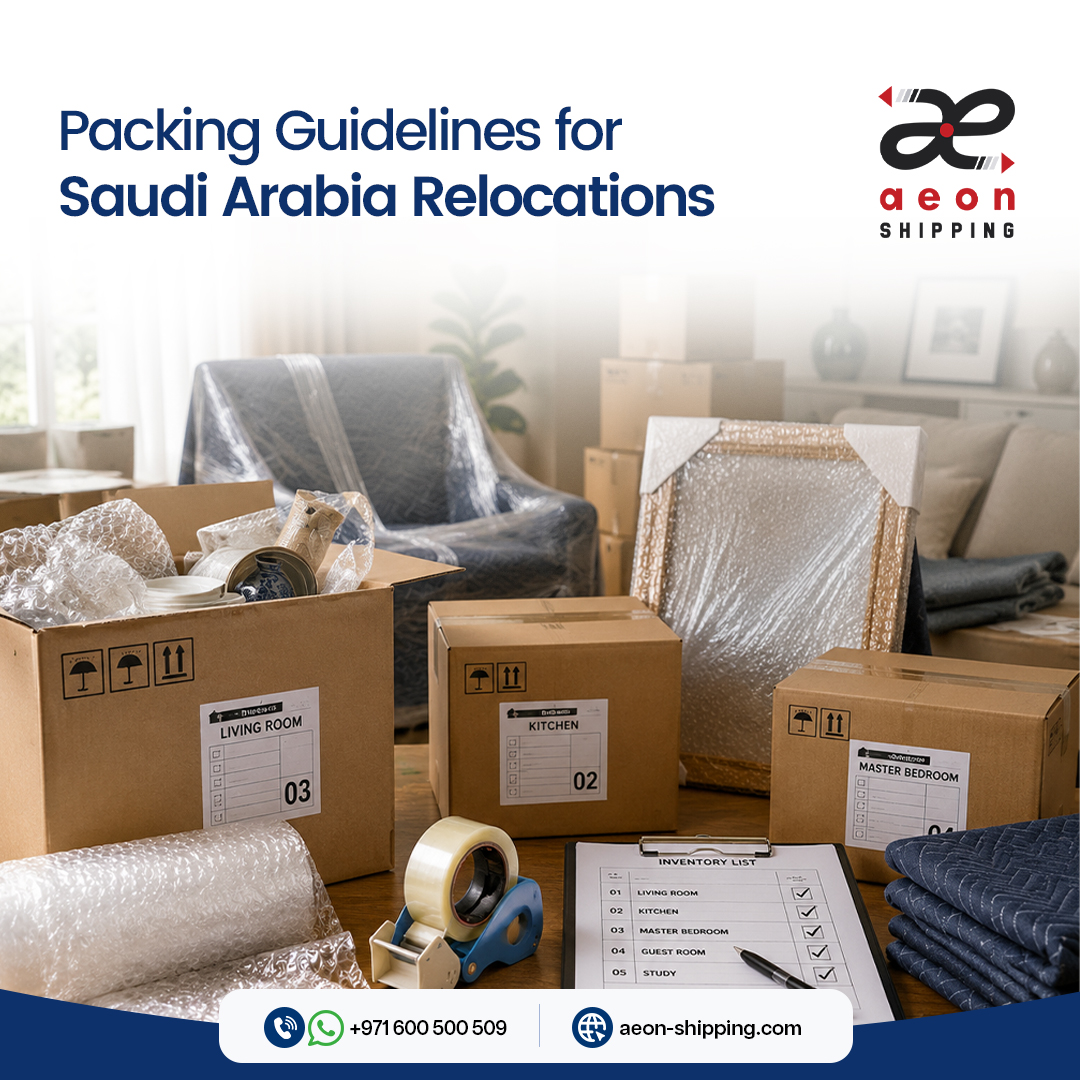
Good packing does two things at once — it protects your stuff, and it actually speeds up customs. Strong boxes for the heavy items. Bubble wrap for anything fragile. Blankets around the bigger furniture pieces. Clear labels on every box — contents, destination room — and numbers that match your inventory sheet.
Here’s the thing about professional packers: they’ve done this a thousand times, so they know the little tricks nobody thinks about. How to break furniture down properly. How to protect a mirror so it doesn’t crack mid-transit. How to wrap electronics so they survive a month at sea. Pay for that expertise now, and you’ll thank yourself later — it’s almost always cheaper than replacing something that got smashed.
And don’t cheap out on materials either. Flimsy boxes collapse under weight. Bad tape gives up halfway through the trip. Thin wrap tears the second something bumps it. Spend a little more upfront on proper supplies — it’s one of those costs that quietly pays for itself.
Cultural and Compliance Considerations
Check your belongings carefully before packing. For books, remove any suggestive covers, though art books containing nudity are best left behind entirely. Movies that are perfectly acceptable in Dubai might not be okay in Saudi Arabia, so review these too. Decorations should also be checked carefully.
Safe items include family photos, regular books, and normal décor. Items to avoid shipping include nude art, Buddha statues, non-Islamic religious items, and anything sexual in nature.
If customs takes an item, it’s gone for good — and worse, the whole shipment gets delayed in the process. When in doubt, it’s best to leave the item behind. If you’re genuinely unsure, ask your mover; they’ve seen almost everything and know exactly what passes and what doesn’t. Better safe than sorry.
Transit Time and Delivery Expectations
Normal transit times run roughly five to ten days by road, two to four weeks by sea, and under a week by air.
Customs inspection timing is hard to predict — a quick review moves fast, while a full check can add another week. It’s nothing personal; it’s simply their job.
A smart approach is to arrange a place to stay for at least two weeks after you arrive, rather than expecting your container on day three, which usually leads to disappointment. Delays happen for all sorts of reasons — border issues, customs backlogs, vehicle breakdowns, or weather problems — so building a cushion into your timeline reduces stress significantly.
Common Challenges When Shipping Household Goods to Saudi Arabia
Paperwork errors cause most problems. Small mistakes like a missing signature, an incomplete inventory list, or an outdated passport can hold things up. Items that get confiscated hurt twice over — you lose the item permanently, and the whole shipment gets delayed as a result.
Delivery limits also catch people off guard. Some compounds don’t allow large trucks, some only permit deliveries at specific times, and some buildings require approval before anything arrives. It’s worth contacting your landlord weeks ahead, not days.
Language barriers can also come up. English speakers are common, but not universal, so it helps to have bilingual contact in Saudi Arabia — a colleague or friend who can step in if confusion arises.
If you’re shipping during Ramadan, expect slower processing, reduced working hours, and extended timelines. It’s not impossible, just slower, so plan accordingly.
Why Choose a Professional International Mover in Dubai
Professional movers have seen it all, know every rule, and have handled thousands of moves already.
Working with one company means you have a single point of contact, rather than juggling separate Dubai packers, shipping companies, Saudi customs contacts, and delivery people who all end up blaming each other while your belongings sit stuck somewhere in between.
Insurance also matters — if you move yourself, you’re responsible for any damage, loss, or theft on your own. And the time savings are significant: moves eat up hours in paperwork, calls, and planning, and letting professionals handle that frees you up to focus on finding a home, sorting out your kids’ schools, and settling into your new job.
Relationships count ,too. Experienced movers know the customs officials and delivery contacts on the ground, which often means your shipment gets priority treatment rather than random handling. Professional movers also carry proper licences, insurance, trained staff, and the right equipment — all of which matter when problems come up.
Tips for a Smooth Household Move to Saudi Arabia
Start early. Give yourself at least a month’s head start. Everything about this process takes longer than you think it will — that’s just how it goes.
Declutter before you pack. Here’s the honest truth: every single item you ship costs you money three times over — to pack it, to ship it, and to clear it through customs. So be real with yourself. Do you actually need that thing, or has it just been sitting in a cupboard for two years?
Find specialists, not generalists. Look for movers who handle the Saudi route every single week, not a company that occasionally does international moves on the side. The ones who do this constantly know Saudi customs inside and out — every quirk, every requirement. Ask them for references before you commit to anything.
Copy everything. Scan your passport, visa, inventory lists, receipts, and letters, and back them all in the cloud. Paper has a way of disappearing exactly when you need it most — a digital copy sitting safely online can genuinely save your entire shipment if something goes missing.
Send a survival box ahead by air. Pack bedding, toiletries, a few days of clothes, and some basic kitchen items into a small box and fly it over separately. Your main shipment is going to take weeks, and having these essentials on hand from day one makes those first few weeks so much easier to live through.
Talk to people who’ve done this already. Find someone who’s made this move recently and ask them what actually happened, not just what the guidebooks say. Expat groups on Facebook are a great place to start — people share tips there constantly, and someone’s usually happy to answer a question or two.
Check your compound’s rules before delivery day. Every residential compound is different — some are strict about delivery times, truck sizes, gate access, or unloading areas. Find out what your building allows before your shipment arrives, not after the truck’s already outside.
Plan your unpacking before you even start packing. Think about what you’ll need first, and label boxes clearly — “open first” boxes make a huge difference. Group kitchen essentials, bedding, and bathroom items together so they’re easy to find on day one.
Keep the important stuff with you, always. Your current passport, jewellery, cash, critical medicines, and irreplaceable photos should travel with you personally — never in the shipment. If it’s genuinely priceless or impossible to replace, don’t risk it on a boat or a truck.
Find local help once you land. A building manager, a friendly neighbour, or a colleague already living there can point you toward the best delivery routes, building restrictions, local quirks, and useful services you won’t find written down anywhere.
Stay flexible, because plans will change. Delays happen. Inspections happen. Getting frustrated about it doesn’t speed anything up — staying calm and working with your mover gets things resolved faster than losing your temper ever will.
Document everything before you pack it away. Take photos of your belongings, record serial numbers on electronics, and keep every receipt. If something breaks or goes missing along the way, you’ll have the proof to back up a claim.
Actually read your insurance policy. Don’t just skim it — understand what’s covered, what isn’t, what the claims process looks like, what the deductible is, and which items are excluded. Ask questions if anything’s unclear before you need to file a claim, not after.
Consider short-term storage if your new place isn’t ready. If your Saudi home isn’t quite move-in ready, or it’s smaller than what you had in Dubai, storage can bridge the gap and keep your belongings safe while you settle in gradually.
Time your move wisely, if you have the choice. Summer tends to be the busiest season — schools are starting, companies are transferring employees — which means higher prices and less availability. Spring or autumn can be a smoother, cheaper window if your schedule allows it.
Communicate clearly, every step of the way. With your mover, with customs, with delivery people — clear communication is what prevents most problems before they start. Ask questions, confirm the details, and write things down.
Conclusion
Thousands of families make this move from Dubai to Saudi Arabia every year, and most of them get through it just fine. It’s complex, sure — but it’s absolutely manageable.
The keys to getting it right come down to a few basics: know the customs rules, get your paperwork in order, choose the right shipping method for your situation, and set timelines that are actually realistic. A professional mover isn’t a luxury here — it’s a smart investment. The peace of mind alone, knowing your belongings will arrive safely and on time, is worth every dirham.
This move is a big deal, and it’s an exciting one. Don’t let the shipping process eat up all your energy before you’ve even arrived. Pay for good service, prepare properly, and keep your focus where it belongs — on the opportunities waiting for you. The move itself is just logistics. A temporary hassle. Your new life in Saudi Arabia is what actually matters — the job, the experiences, the fresh start.
Shipping just gets your things there. You’re moving for reasons far bigger than that. Keep perspective, stay organised, and lean on the professionals where it counts, and you’ll be unpacked and settled before you know it — shipping headaches long forgotten, living the life you moved for in the first place.
Here’s to a smooth move and a great beginning in the Kingdom. Your Saudi adventure awaits — make it count.

