
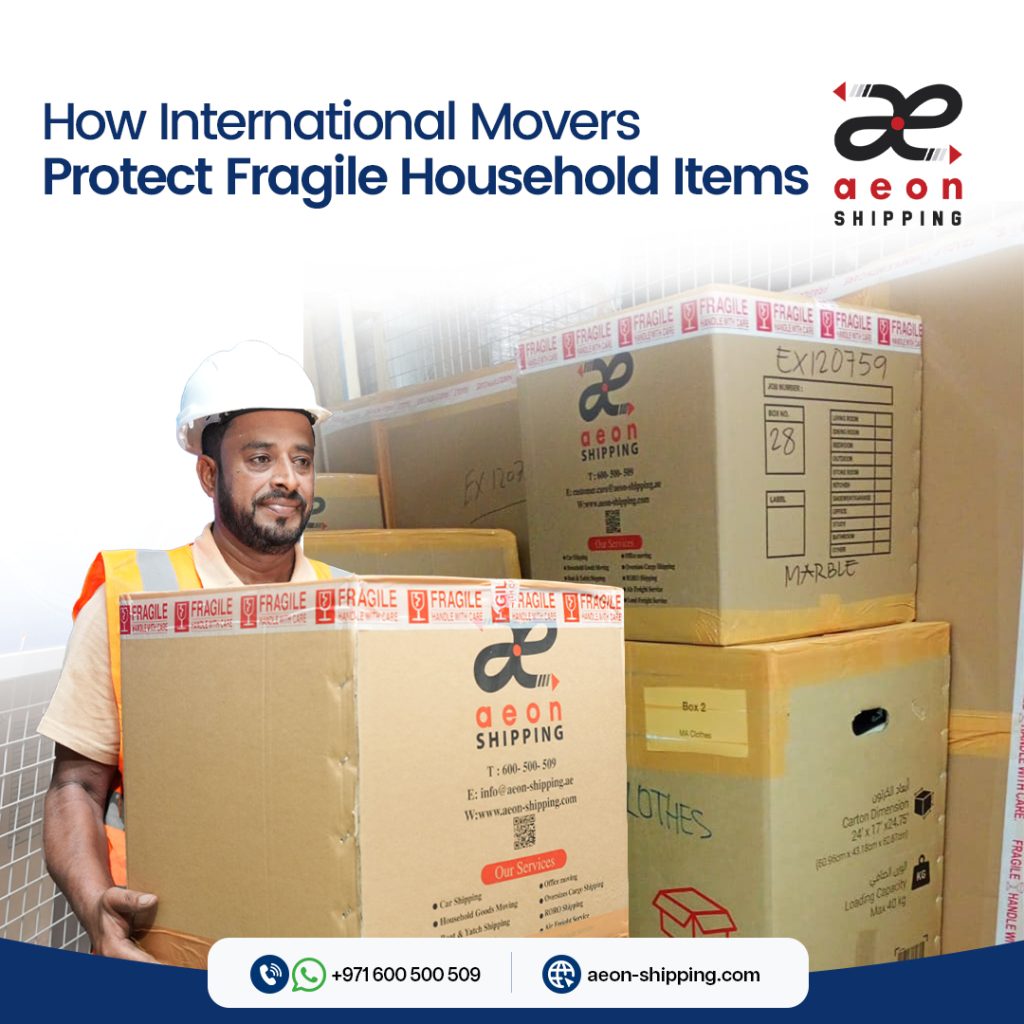
So, you are moving to a new country? You are excited about the fresh start, but remember it comes with a cost. The very thought of “How am I going to get my fragile household items to the new place safely?” can thwart your excitement. Glassware, electronics, and old family heirlooms are the most at risk during these long trips. International moves aren’t just like local truck rides; here, sea or air travel is involved, there are long waits, and many pairs of hands handling your boxes.
What makes it more stressful is that once your shipment leaves your sight, you have very little control over what happens next. You can’t stand next to the container and supervise every lift or every stack. That is why the methods, materials, and experience of your chosen mover matter more than most people realise. A good mover is not only transporting objects, but also protecting memories, investments, and a sense of home.
Choosing the right international mover is the best move you can make. At Aeon-Shipping, we don’t just “move boxes”—we move lives. We use specialised tools and decades of skill to keep your fragile household items safe. This guide explains how we turn a risky journey into a safe arrival.
The “Eight-Touch” Reality: Why Standard Packing Fails
Just close your eyes and imagine how your belongings move in this tedious process. It all starts at your doorstep, where everything is heaped into a truck and then taken to a warehouse. There, your stuff is transferred to a massive steel container and pulled over to the port. Then, your stuff “meditates” for weeks, sitting in the belly of the ship, tossing around when the engine vibrates every single thing inside. It is a long, rough journey, and if the packing isn’t perfect, those weeks at sea will definitely show by the time the container finally opens at your new home. Then, finally, when it reaches the land, the stuff needs to be offloaded by the cranes, and the customs guys then come and poke around. Finally, a truck takes your stuff to your new home. If you are counting, then that is almost eight times or so that your most fragile items are being handled by different people who are constantly in a hurry as if they are late for an interview.
Each one of those stops is a new set of people handling your most fragile treasures. Without industrial-grade packing, the “vibration of the sea” or a single rough crane lift can turn your heirlooms into a pile of junk. The only realistic way to manage this risk is to assume every link in the chain is rougher than you would like, then pack to absorb that abuse.
Common Fragile Household Items We Handle
Glass stuff is easily the biggest headache for anyone moving overseas. You’ve got the mirrors, those heavy glass-topped dining tables, display cabinets, and, of course, the fancy crystal glassware you probably got for your wedding. One tiny crack and the whole thing is basically garbage—there is no “fixing” a shattered heirloom properly. If you watch how a crew handles a massive, full-length antique mirror, we’re not kidding when we say we were holding our breath the entire time they were loading it. It is absolutely nerve-wracking to watch.
Glass and crystal don’t just break from impacts—pressure cracks them too. Too much weight pressing on one side of the box, and you’ll open it up to find spiderweb cracks running through the middle. That’s why experienced movers focus heavily on protecting corners and edges instead of just wrapping the flat bits.
Electronics and High-End Appliances
Your 4K TV or gaming PC has internal parts that are incredibly sensitive. We use anti-static wraps and form-fitting foam to keep everything stable and dust-free. Long-term vibration can actually shake internal parts loose, so we pack the “insides” to keep them from rattling while the ship is at sea.
Cables, mounts, and accessories are packed in clearly marked bags, often in the same carton as the main unit, so reassembly at the destination is easier. Screens receive special protection because even light pressure in the wrong place can leave a permanent line or dark patch. Where original manufacturer boxes are available, they are often used as an inner box, then reinforced with an outer export-strength carton.
Artwork, Antiques, and Collectables
A hand-painted canvas or a statue from the 1800s can’t be replaced. We use acid-free paper so the wrapping won’t stain anything, and we often build wooden shells specifically for these items. Sculptures get fixed to a base inside their crate—stops them tipping or rotating even when the crate’s tilted. Frames and canvases stand upright with foam or cardboard between them, never stacked flat.
Really valuable pieces get photographed and measured before packing. The crate’s then built to fit those exact measurements. Takes more time but drastically reduces the chances of knocks, rubbing, or marks on the surface.
Industrial-Grade Packing Materials
You won’t find our supplies at a local shop. We use “export-grade” materials designed for the rough conditions of the ocean.
Heavy-Duty Cartons:
These aren’t your standard boxes. Double or triple layers of thick cardboard stop them from getting crushed when stacked ten high in a container. The extra thickness also resists punctures from stray nails, pallet edges, or whatever else is being shipped nearby.
Bubble Wrap and Foam:
Large-cell bubble wrap goes on heavy items, soft foam sheets on delicate surfaces that scratch easily. What we use depends on the weight and how sensitive each item is. A solid wooden statue might just need foam on the corners, but a glass lamp needs a full foam wrap plus corner guards.
Acid-Free Tissue Paper:
Essential for silverware and old photos to prevent chemical damage or “sweating” in a hot container. Standard newspaper ink can transfer to surfaces, and ordinary plastic can stick if the temperature rises, so neutral, non-reactive materials are a must for long journeys.
Custom Wood Crates:
For your most valuable items, we build a wooden box to the exact millimetre, ensuring it cannot move or be squashed. The timber used is treated to meet international regulations, so the crate can pass through ports and borders without delays or fumigation.
The Step-by-Step “Safety Bubble” Strategy
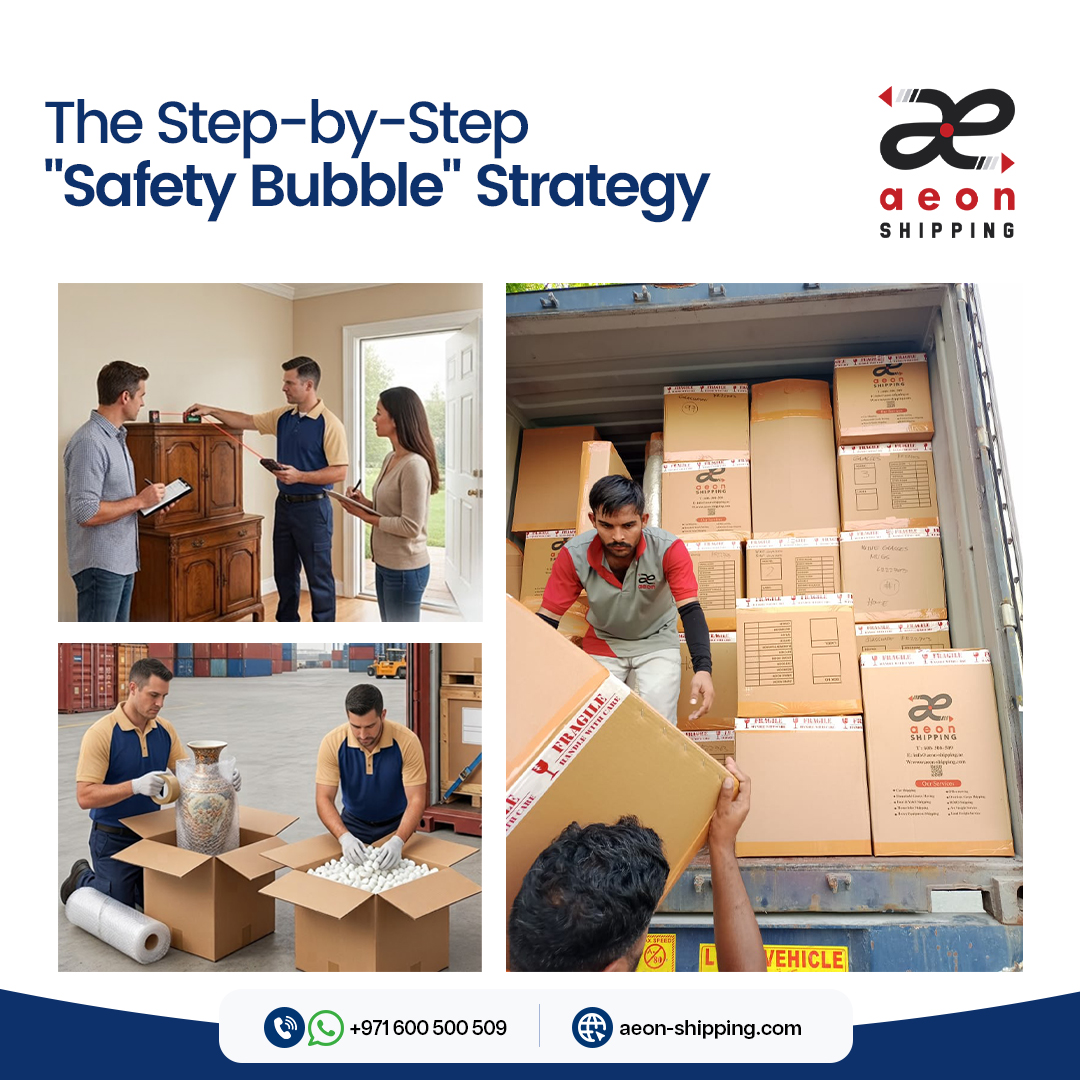
Detailed Assessment:
We walk through your home first. We identify every high-risk item and measure the exits to ensure we can move them out safely. This is also the stage where special instructions are noted—for example, items you want unpacked first at the destination or pieces with existing damage.
Individual Layering:
Nothing touches anything else. Each piece gets wrapped separately, creating thick cushioning that soaks up impacts. Handles, corners, and bits that stick out get extra padding so they don’t poke through the wrapping or press into other items.
Void Filling:
If a box has “dead air,” things will move. We fill every gap with paper or foam chips until the box is totally silent. No rattle, no break. This method also helps the box keep its shape when stacked, because the pressure is spread evenly through the contents instead of crushing weak spots.
Reinforced Sealing:
We use high-strength tape and cross-tape the bottom of heavy boxes so they never burst open. Labels indicating “heavy” help handlers lift correctly and avoid sudden drops or tilts that stress the box seams.
Labelling and Global Documentation
In a busy port, labels are what protect your stuff. We stick on symbols port workers recognize everywhere: the “Fragile” wine glass, arrows pointing up, and the “Keep Dry” umbrella. These quick visual markers matter in noisy, hectic environments where nobody’s stopping to read notes on every box.
We also make a detailed list for every shipment. Helps get through customs without hassles and makes finding your things easier once you’ve arrived. Box numbers match up with room names and quick descriptions, so when everything’s delivered, you can send boxes to the right rooms instead of ripping them all open in the hallway.
Clear documentation also backs up insurance claims if you need to make one. When what’s in each box is recorded properly, proving what got shipped and what condition it was in before transit becomes straightforward instead of a headache.
Safe Loading: The “Tetris” Strategy
Weight Balance: We put heavy, solid crates on the bottom to create a stable floor. Your light, fragile boxes go on top. This stops heavy items from crushing weaker cartons and keeps the centre of gravity low, which is crucial when the container is lifted or the ship rolls in rough seas.
Lashing and Bracing:
In a storm at sea, a ship can tilt significantly. We use heavy-duty nylon straps to “lash” your furniture to the container walls so it doesn’t become a wrecking ball inside the container. Timber blocks or metal bars may be added between stacks to stop sideways movement.
Moisture Control:
We put massive desiccant bags inside the container to soak up humidity and prevent “container rain” from ruining your wood or electronics. Sensitive items may also be wrapped in plastic or barrier films to create an extra shield against moisture.
Why the Pros (Aeon-Shipping) Save You Money
Insurance companies are smart. They rarely cover “PBO” (Packed by Owner) boxes because they know most people don’t pack for the ocean. If you pack it and it breaks, you’re on the hook. But if a professional team packs it, you get full “All-Risk” coverage. Plus, we use ISPM-15 certified wood so your crates don’t get seized by customs for having bugs in the timber.
Beyond insurance, professional packing saves you from hidden replacement costs. Replacing a complete dinner set, a smashed TV, or a broken antique can easily cost way more than the difference between packing it yourself and getting experts to do it. When everything shows up in one piece, you’re not scrambling to buy stuff in a new country or trying to replace things that can’t actually be replaced because of sentimental value.
Tips for a Successful Move
Declutter First:
Why pay to ship a broken chair halfway across the world? Use the move as a chance to work out what you actually need and what you’re just hauling around out of habit.
Photograph Everything:
Take decent photos of your fragile items before they get packed. Helps with insurance and also reminds you how things were set up in your old place if you want the same arrangement.
Keep High-Value Items Close:
Jewellery, passports, property deeds—these stay in your carry-on. Small irreplaceable items are safer with you than in any container, no matter how well it’s packed.
You can also prepare a “first-week” essentials box with basic kitchen items, bedding, and a few personal comforts. Ask your movers to load it last so it comes out first at the destination.
Conclusion
Don’t think that protecting household items during an international move is just about using bubble wrap. There is more than this. It is a scientific process that can only be mastered through years of experience. The best thing is to choose the right international mover and turn a risky journey into a safe experience. Companies like Aeon-Shipping are ready to take the huge burden from your shoulders. They use heavy-duty materials that comply with international standards, combined with their global expertise, to make sure your treasures survive the high seas. Why not reach us out today for a quote and let’s get your world moving—safely.

